Overview

In this program students will belong to the labs of Kobe University for one week to have research experience. By this program the students will learn the state-of-the-art of the field in chemistry and culture of Japan. Faculty members of Graduate School of Science, Graduate School of Human Development and Environment, Graduate School of Agricultural Science, and Center for Life Photonic Innovation will host the students.

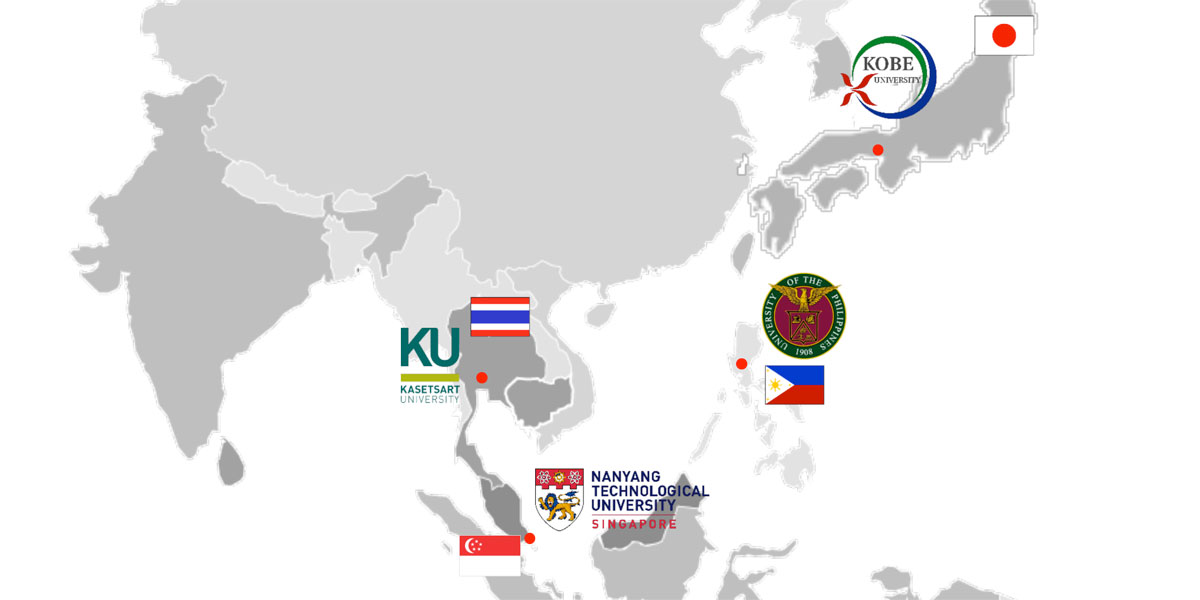
Students from the following universities are invited.

Nanyang Technological University, Singapore
University of the Philippines, Los Banõs
Kasetsart University, Thailand

Research themes

Please click on the title to view the video description. We will be holding lab tours on July 30 (Thu) afternoon, and we plan to visit as many labs as possible.

  1. Radiation physics and spectroscopy in earth and planetary science
    Radiation from radioisotopes, UV light, and atmospheric pressure plasma induce defects or active species in materials. In the course, we observe them using spectroscopy to understand what happens there.
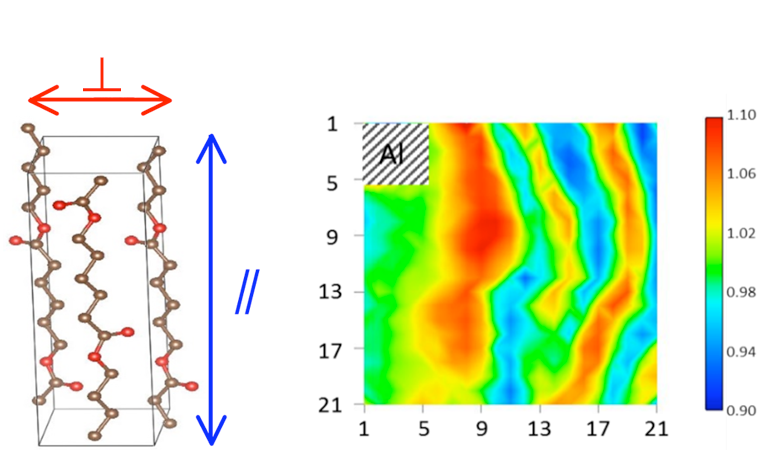
  2. Low- and high-frequency Raman imaging of microplastics
    Raman imaging measurements will be performed to investigate the degree of degradation at the surface and in the interior of microplastics collected from a beach in Kobe.
  3. Molecular mechanism of Chloroplast division in a liverwort, Marchantia polymorpha
    The liverwort Marchantia polymorpha represents a basal lineage of land plant evolution. Meanwhile, chloroplasts, which symbiotically evolved from ancient cyanobacteria, govern plant bioproductivity. Chloroplast division in this species relies on a machinery composed of cyanobacteria-derived and limited plant-specific proteins. Furthermore, these chloroplasts retain a peptidoglycan layer—lost in angiosperms—involved in the division process. However, the underlying molecular mechanisms remain largely elusive. Through analyzing a suite of genome-edited mutants, this study aims to elucidate the chloroplast division system, thereby contributing to developing industrially valuable and edible Marchantia polymorpha.
  4. Functional Genomics in Tissue Regeneration
    The genomic basis of tissue regeneration is investigated through comparative studies of highly regenerative fish and amphibians and mammals with limited regenerative capacity. Particular emphasis is placed on the functions of non-coding DNA regions, integrating computational, molecular, and histological approaches to elucidate the regulatory mechanisms underlying regenerative capacity.
  5. Engineering transition metal-free photosensitizers enabling CO2 photoreduction
    Light-driven reduction reactions are at the heart of artificial photosynthesis, a promising technology for sustainable energy conversion. In our laboratory, we explore metal-free photocatalytic systems that perform challenging reduction reactions without relying on scarce transition metals. During this program, participants will synthesize and study a highly reducing organic photosensitizer developed in our group and apply it to the photochemical conversion of CO₂. Through these activities, students will gain hands-on experience with state-of-the-art research at the interface of chemistry, renewable energy, and artificial photosynthesis.
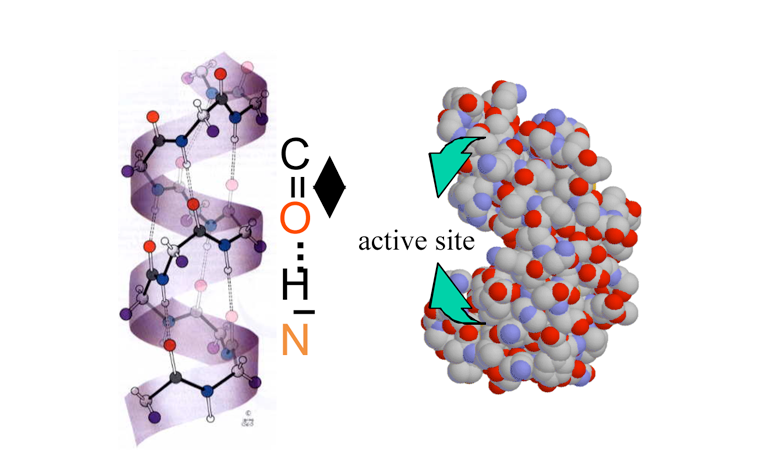
  6. Expression and purification of enzymes, and their activity measurements
    Enzymatic reactions play key roles in our daily life. Their activity can be evaluated based on the Michaelis-Menten analysis as described in all text books of Biochemistry. In this course, you can learn how to express and purify the enzymes, and their activity measurements using spectroscopy.
  7. Terahertz time-domain spectroscopy on hydrated soft matters
    Terahertz (THz) frequency region is located between microwave and infrared regions, and molecular motions and intermolecular interactions in the THz region reflect unique properties of materials, which are important to understand structural stabilization, chemical reactions, and functionalities of molecular systems.

Information

Organizer