
GEPP Co-hosted an International Seminar on “Human Security and Mobility in the South Pacific: Past, Present, and Future”
 gepp1
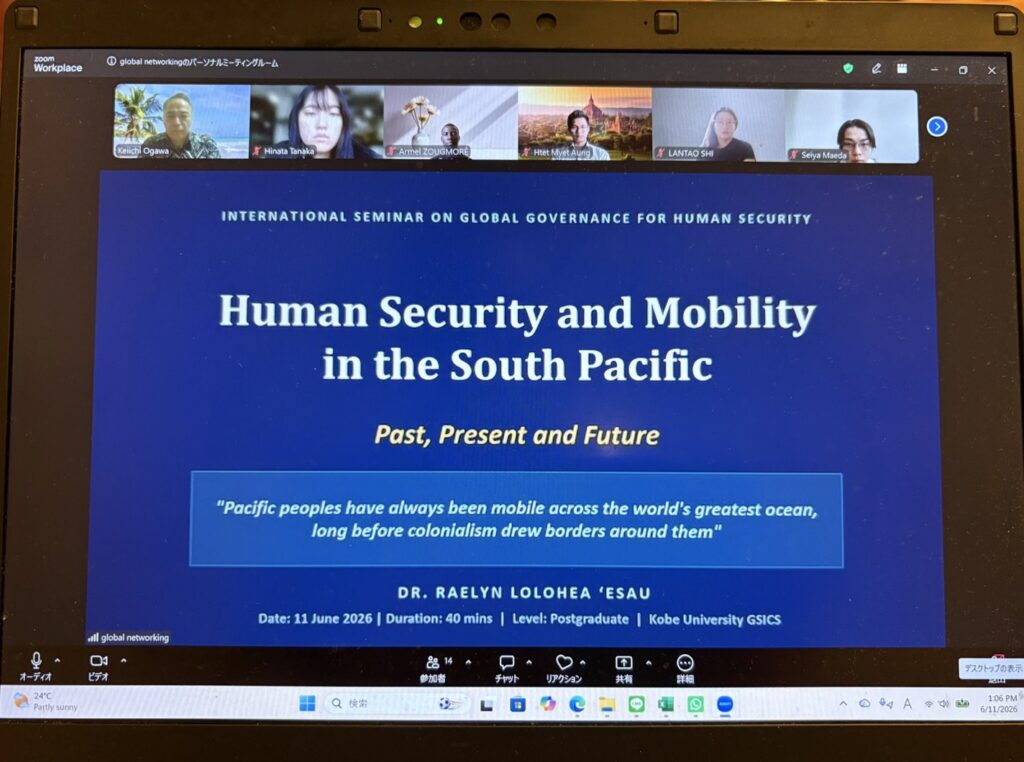
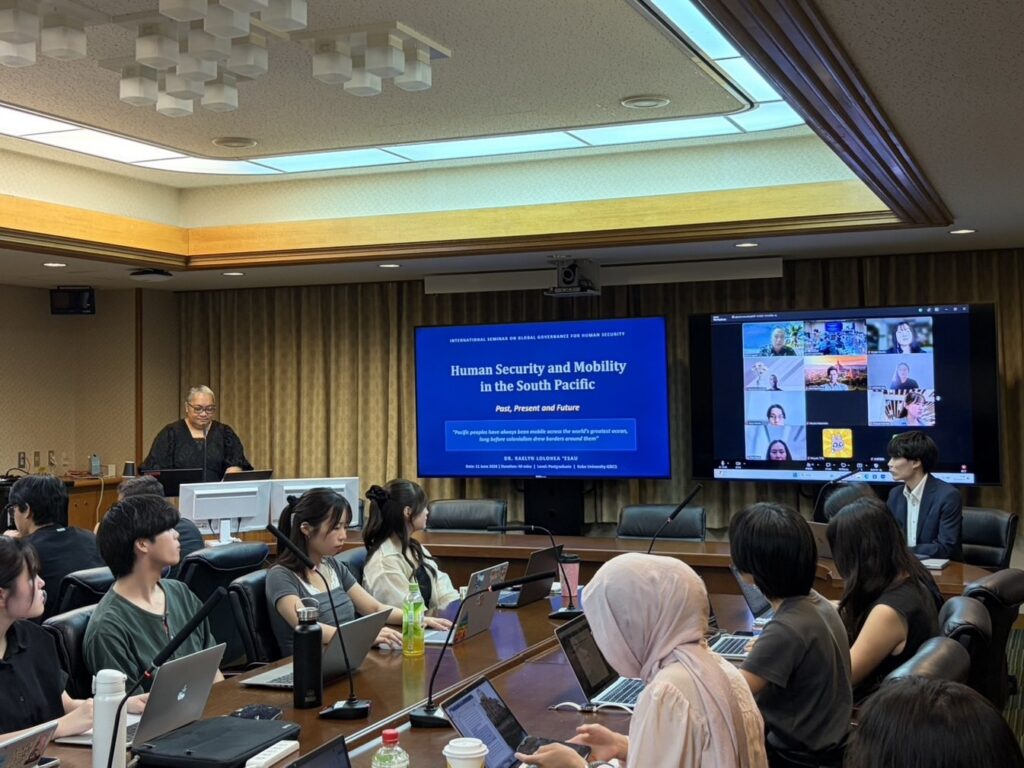
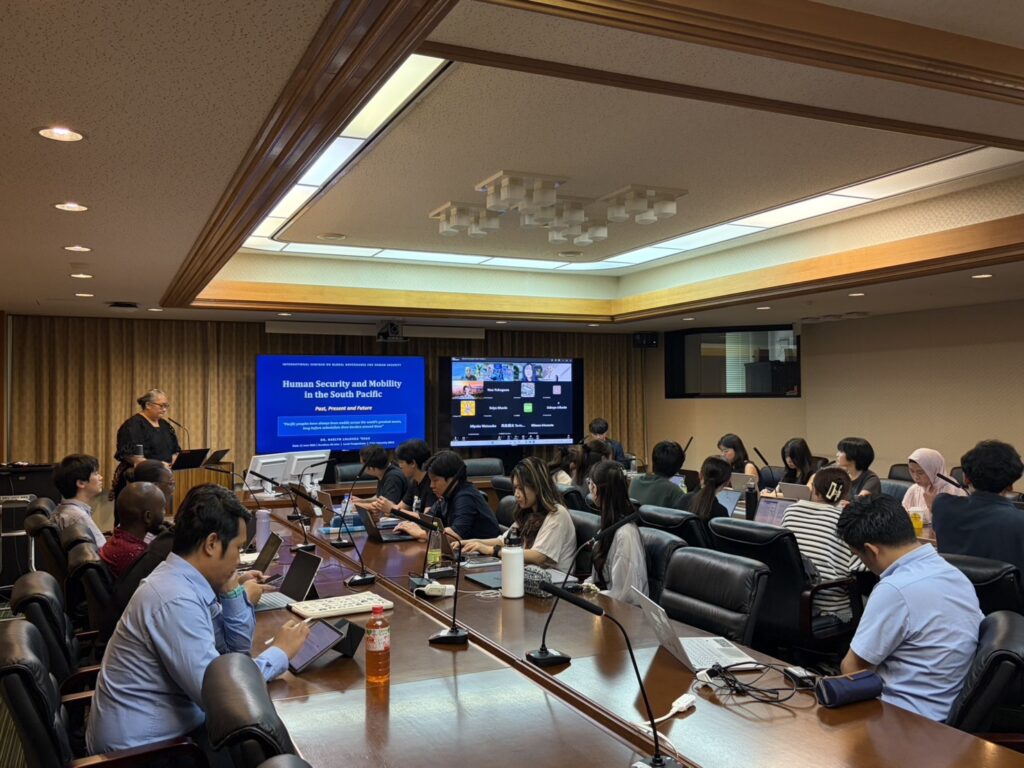
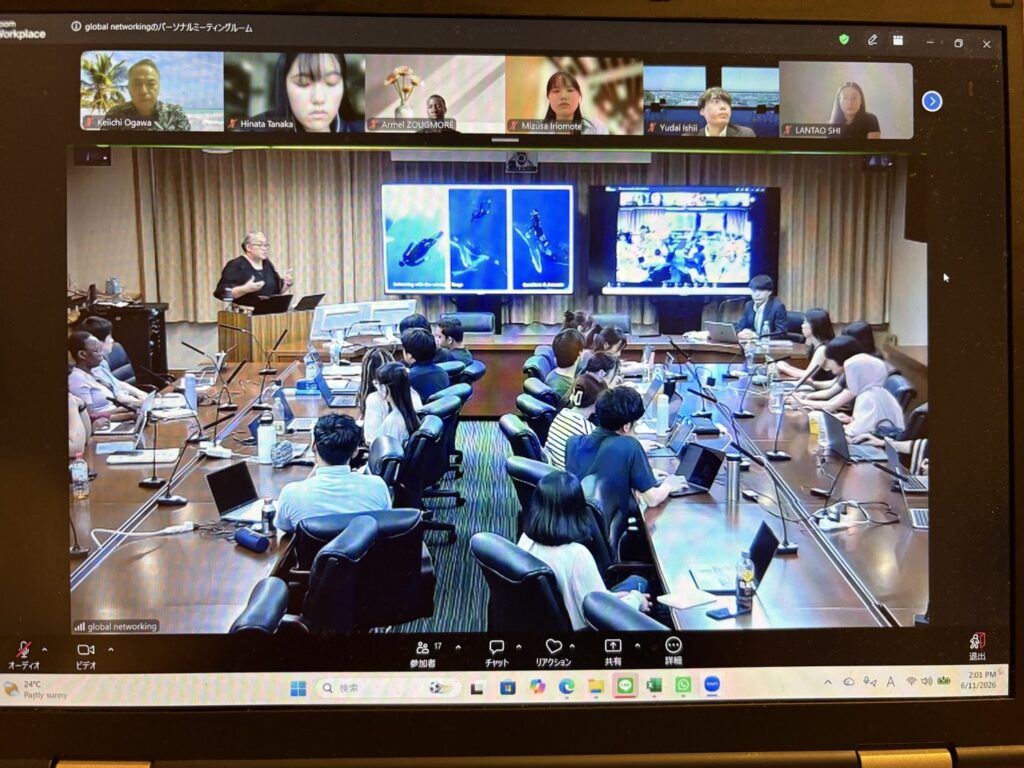
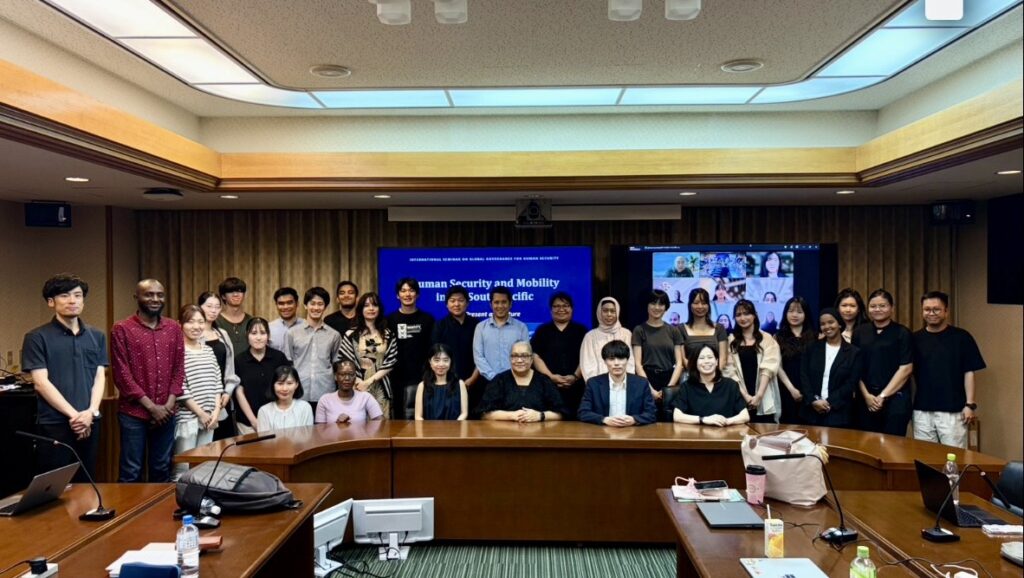
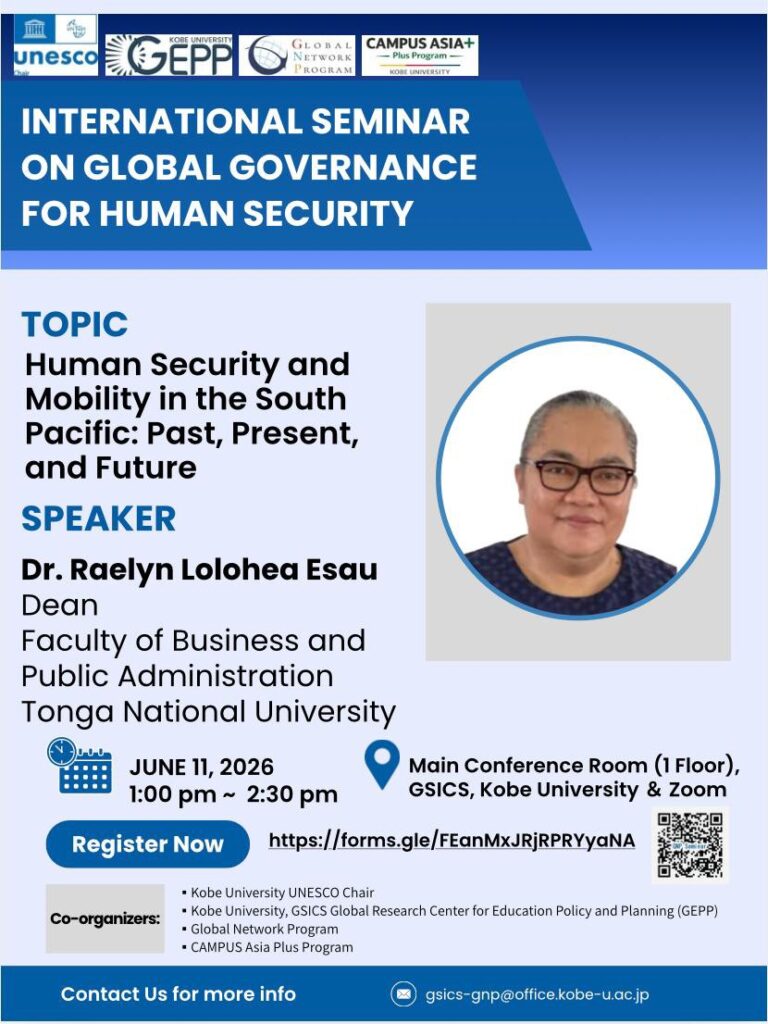
gepp1On June 11, 2026, an International Seminar on Global Governance for Human Security titled “Human Security and Mobility in the South Pacific: Past, Present, and Future” was held. The seminar was co-organized by Kobe University’s UNESCO Chair, the Global Research Center for Education Policy and Planning (GEPP) at the Graduate School of International Cooperation Studies, Kobe University, the Global Network Program, and the CAMPUS Asia Plus Program, and was conducted in a hybrid format.
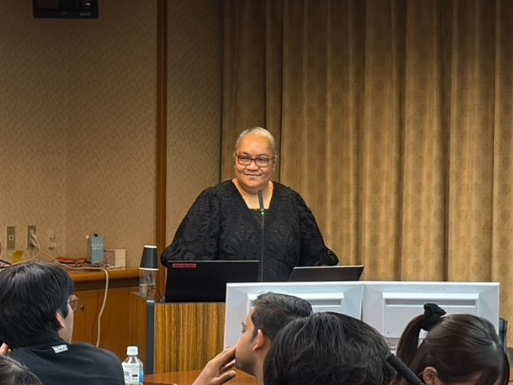
The seminar welcomed Dr. Raelyn Lolohea Esau, Dean of the Faculty of Business and Public Administration at the Tonga National University. Dr. Esau examined human security and mobility in the South Pacific from three perspectives: past, present, and future. Beginning with over 3,500 years of wayfinding tradition, she traced how historical disruptions — colonial forced labour, nuclear displacement, and the drawing of territorial borders — have contributed to present-day vulnerabilities, including low Human Development Index (HDI) rankings, non-communicable diseases, gender-based violence, and youth unemployment. She also analysed the opportunities and human costs of labour mobility schemes, the limitations of existing international law, and presented three future scenarios: a deepening climate crisis, the construction of a rights-based mobility framework, and strengthened in-country human security.
A total of 45 students, faculty, and staff members participated in the seminar, with 28 attending in person and 17 joining online. Participants gained a deeper appreciation of Pacific mobility as an expression of identity and resilience, and of the urgent need for new international legal architecture to address climate-driven displacement. The seminar offered a valuable opportunity to recognise how the South Pacific, though geographically distant, occupies an increasingly central place in global debates on human security, climate change, and development partnerships.