
GEPP Co-hosted an International Seminar on “Understanding the World Bank in the Global Architecture”
 gepp3
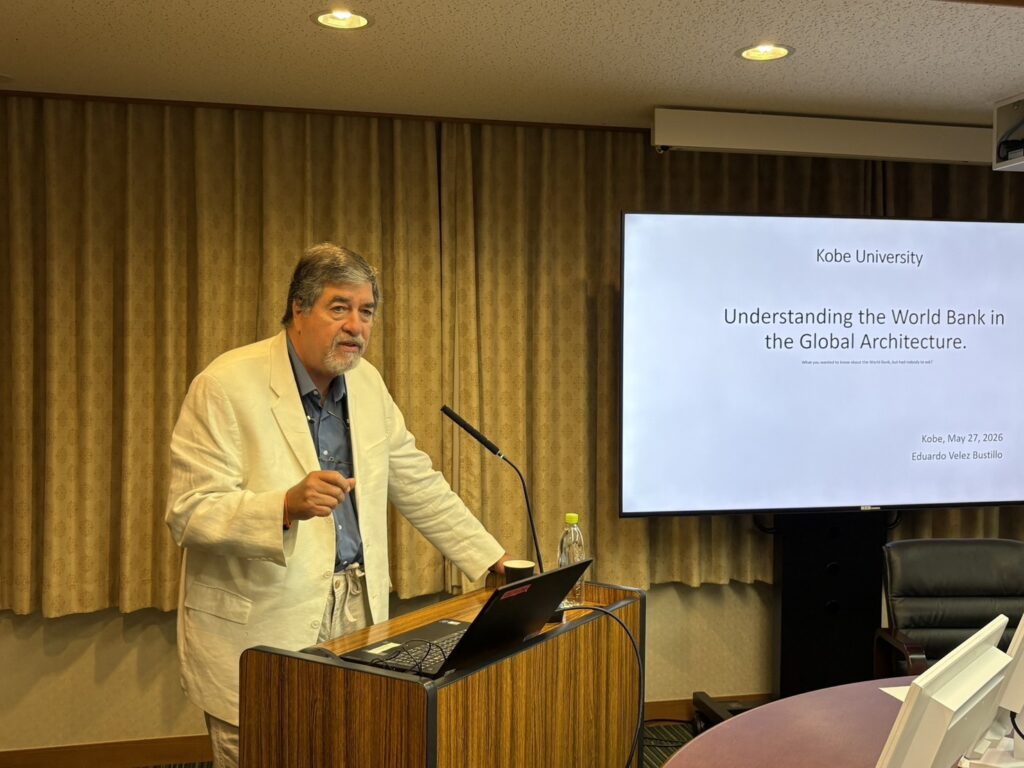
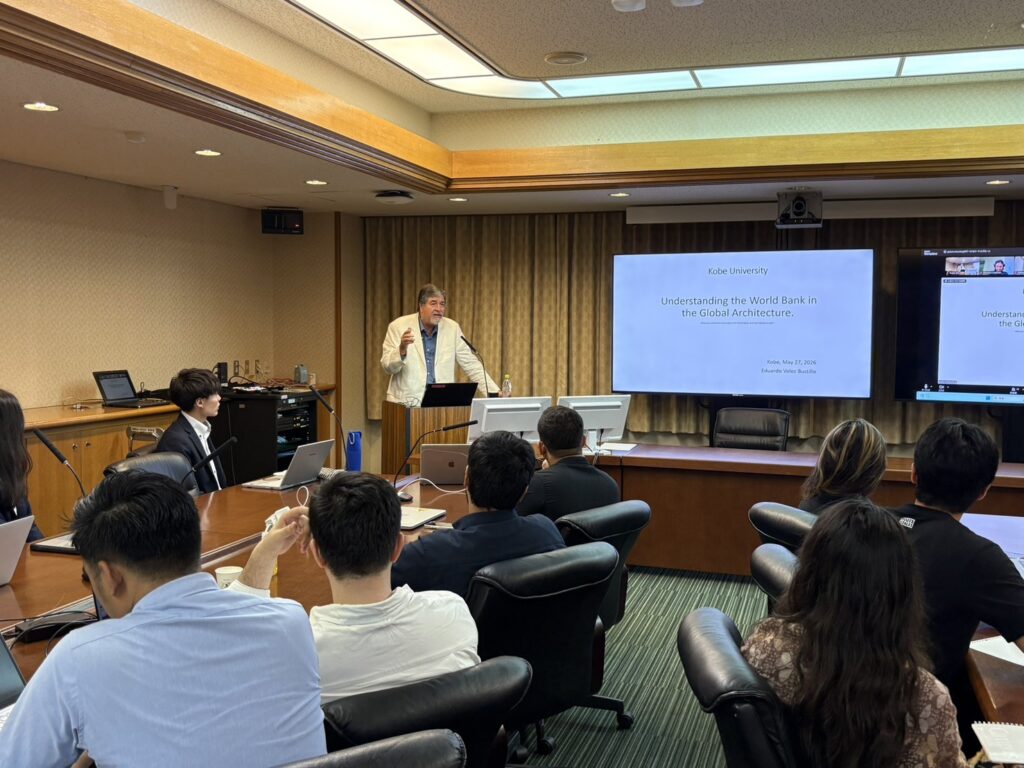
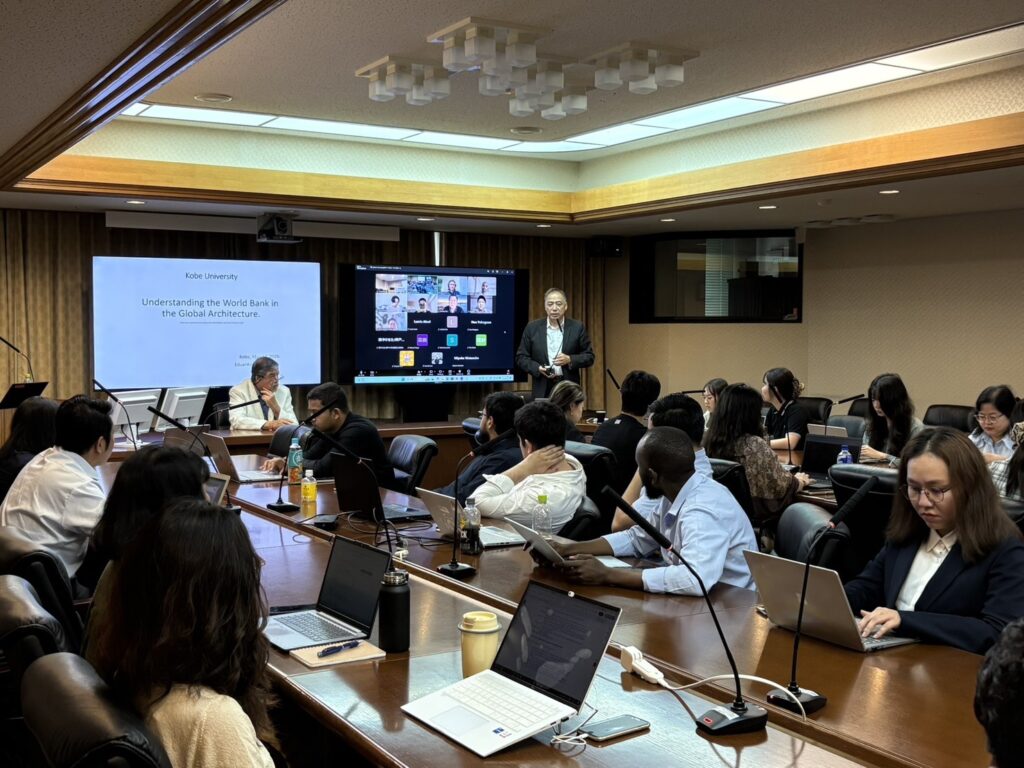
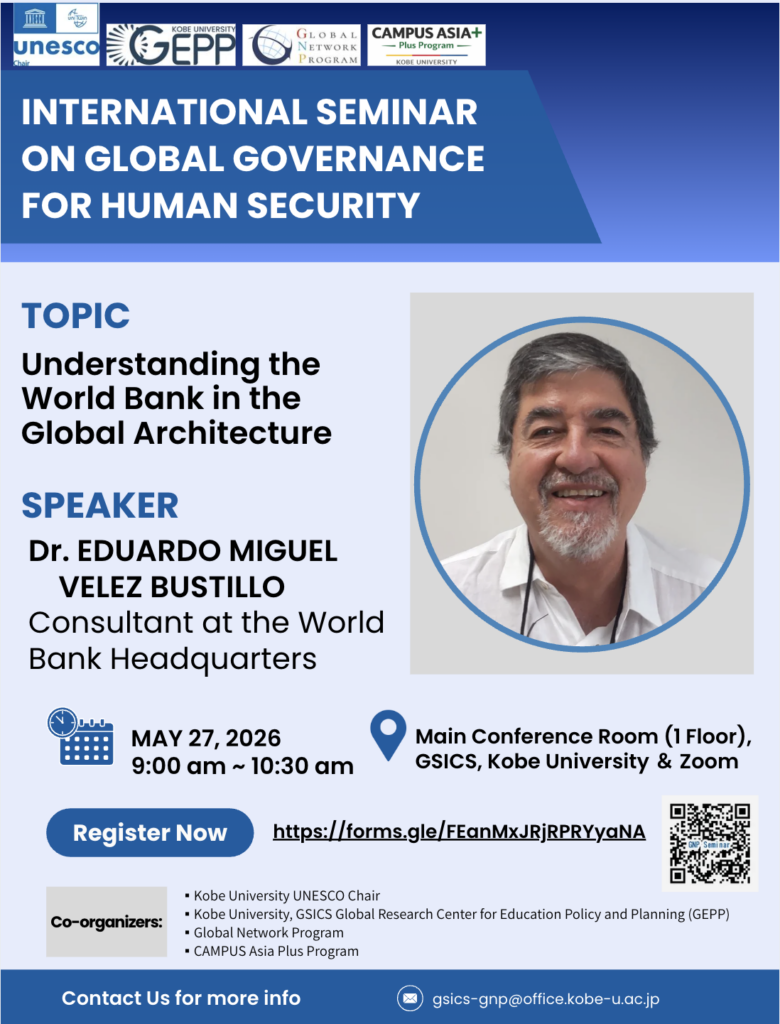
gepp3On May 27, 2026, an International Seminar on Global Governance for Human Security titled “Understanding the World Bank in the Global Architecture” was held. The seminar was co-organized by Kobe University’s UNESCO Chair, the Global Research Center for Education Policy and Planning (GEPP) at the Graduate School of International Cooperation Studies, Kobe University, the Global Network Program, and the CAMPUS Asia Plus Program, and was conducted in a hybrid format.
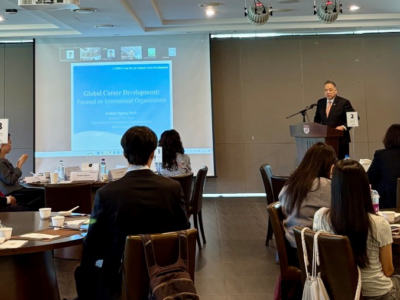
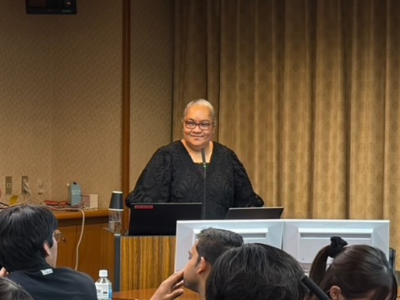
The seminar welcomed Eduardo Miguel Velez Bustillo, Consultant at World Bank Headquarters. In his lecture, Dr. Velez Bustillo discussed the role of the World Bank within the broader framework of international development and global governance. He explained the institutional position of the World Bank in the international community and how it collaborates with national governments, international organizations, and development partners to address development challenges. In particular, participants were able to deepen their understanding of how the World Bank differs from other international organizations within the United Nations system, while also learning how these institutions cooperate in practice. He also introduced the functions of the World Bank from the perspectives of development finance, policy advice, knowledge sharing, and capacity building.
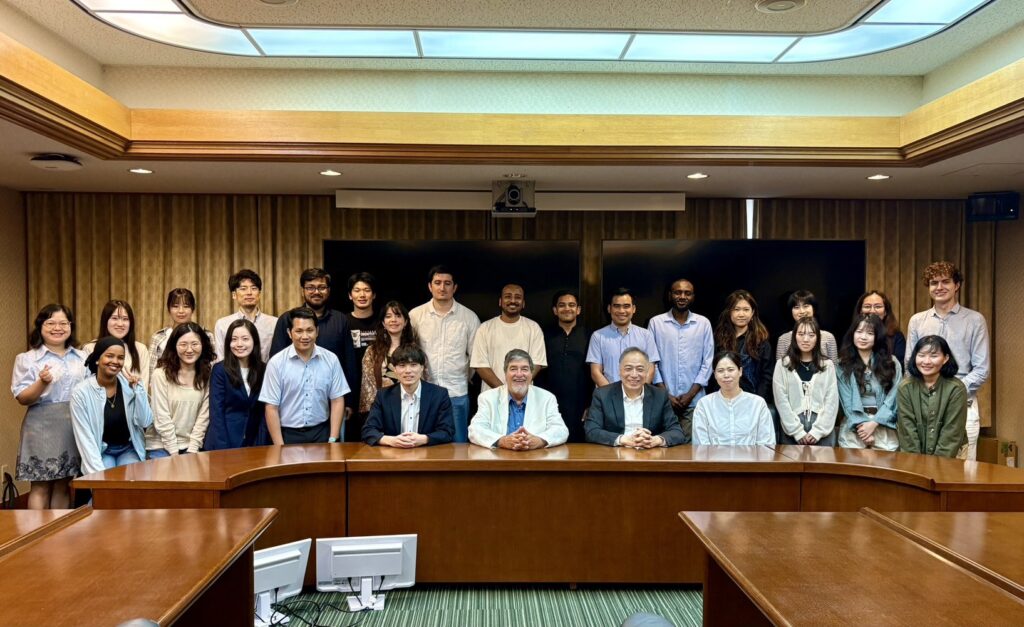
A total of 43 students, faculty, and staff members participated in the seminar, with 26 attending in person and 17 joining online. Through the seminar, participants gained a deeper understanding not only of the World Bank’s concrete operations, organizational structure, and working style, but also of the practical role it plays in international development and global governance. Furthermore, the lecture provided valuable insights into the skills and career development required to work at the World Bank and other international organizations. Participants also had the opportunity to learn how development challenges are addressed through collaboration among diverse actors, making the seminar a meaningful opportunity to reflect on international development from both practical and professional perspectives.