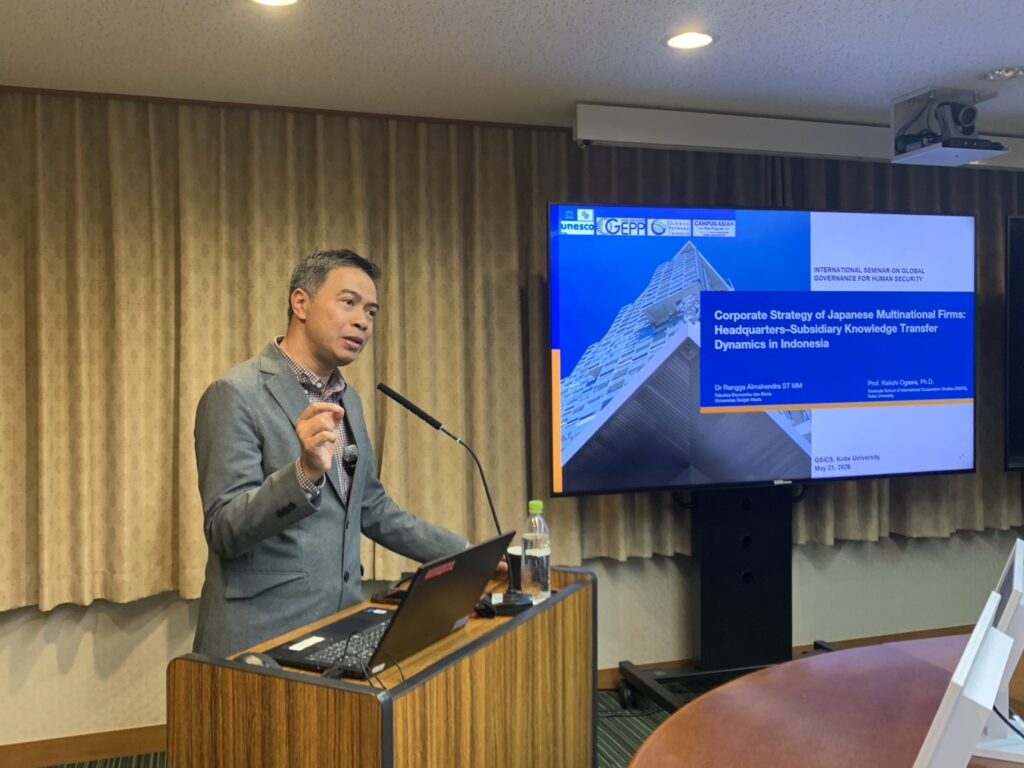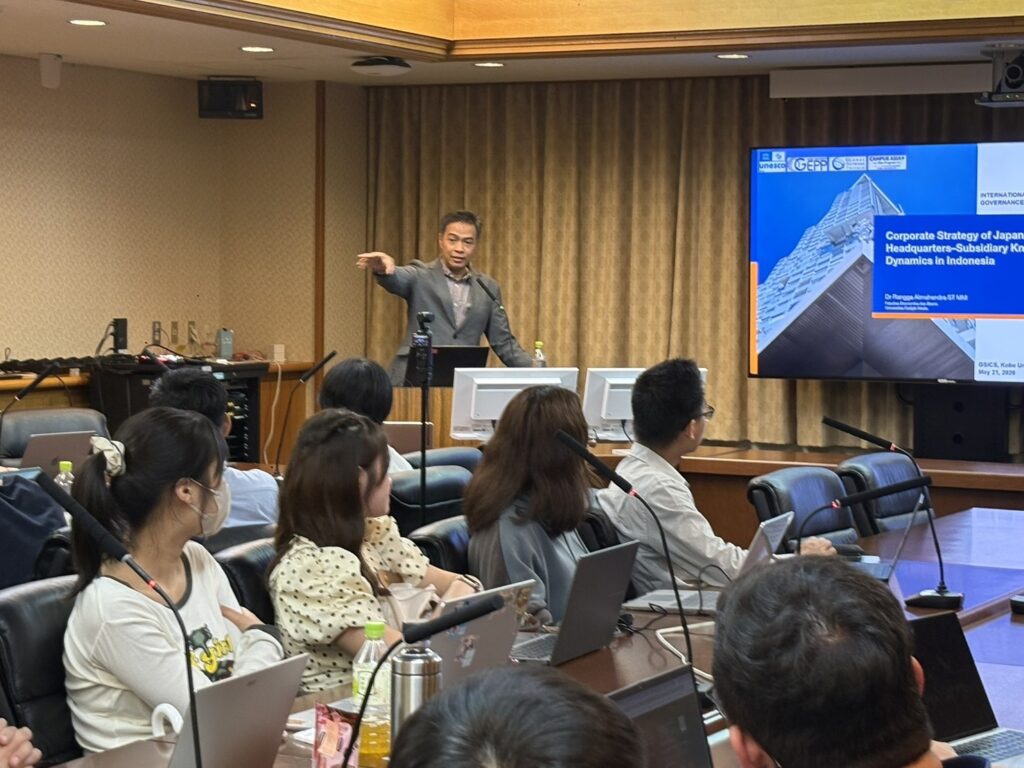

GEPP Co-hosted an International Seminar on “Corporate Strategy of Japanese Multinational Firms: Headquarters-Subsidiary Knowledge Transfer Dynamics in Indonesia”
 gepp1
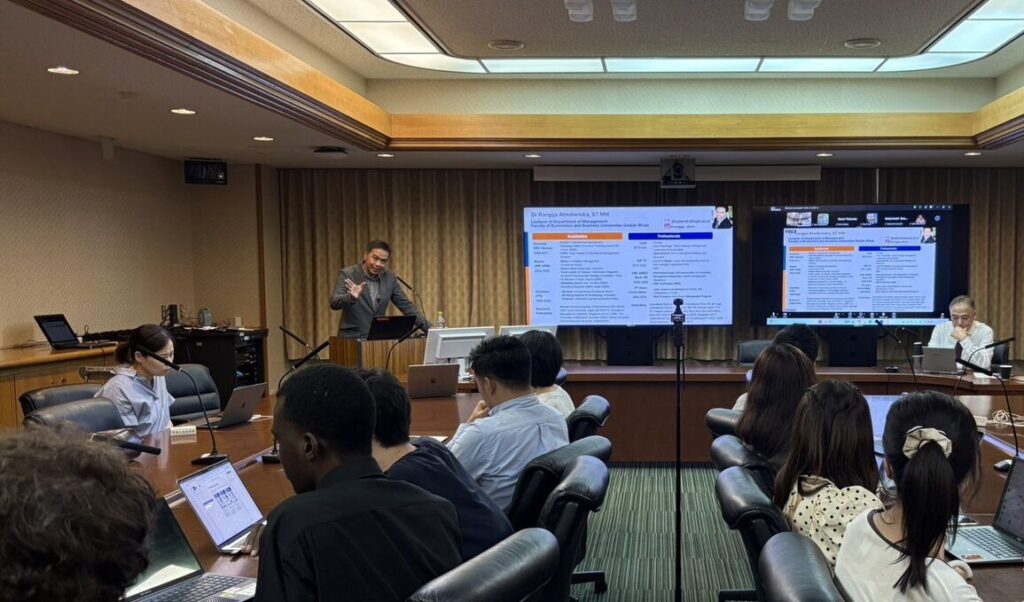
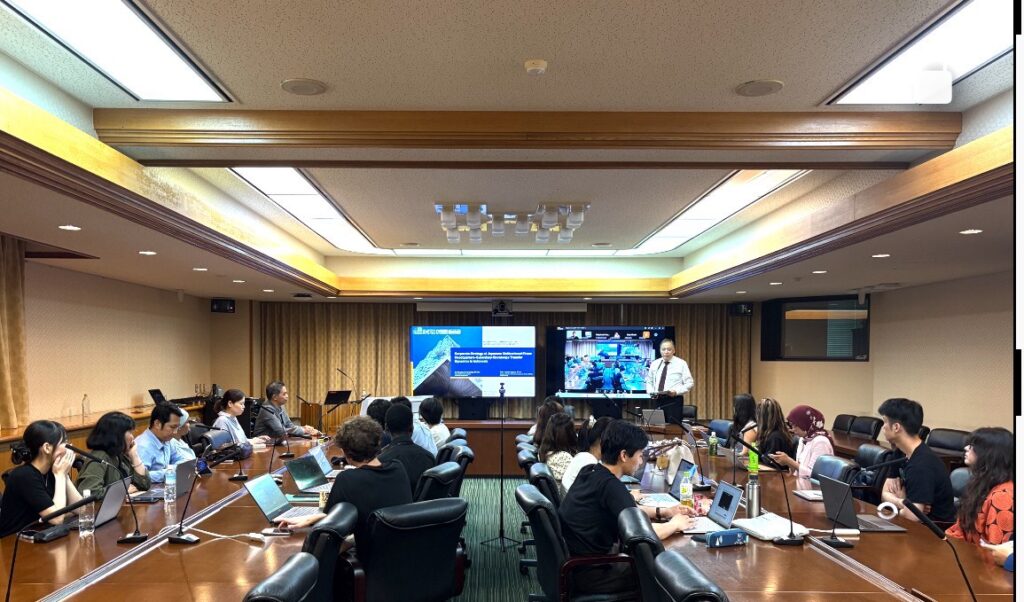
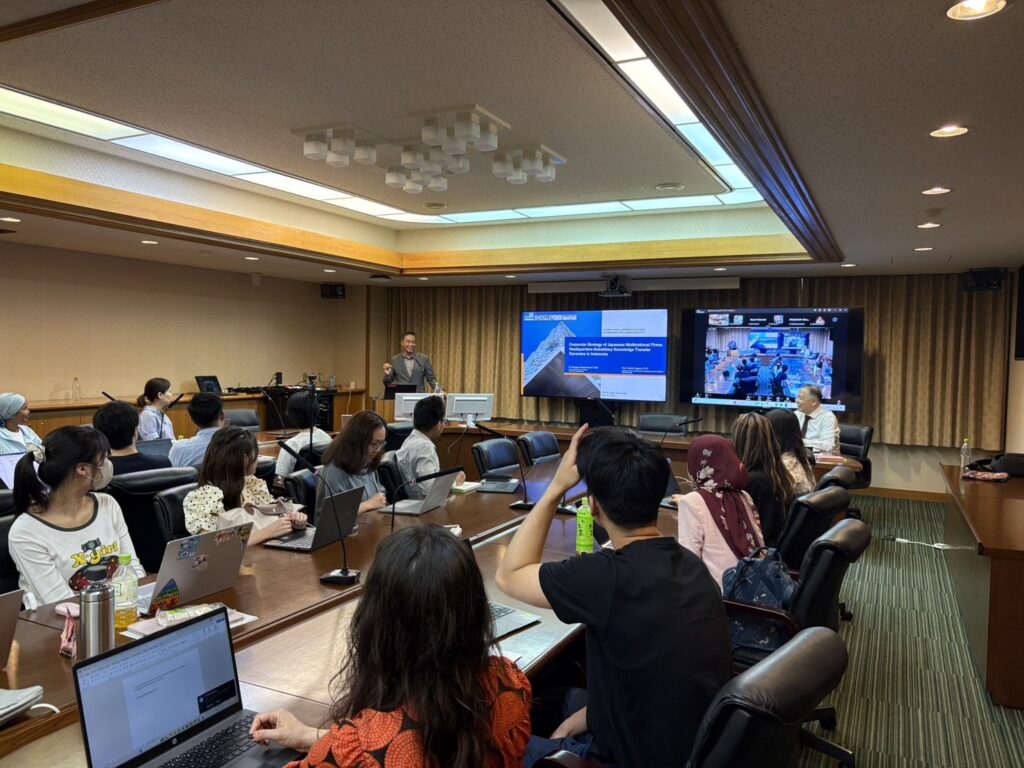
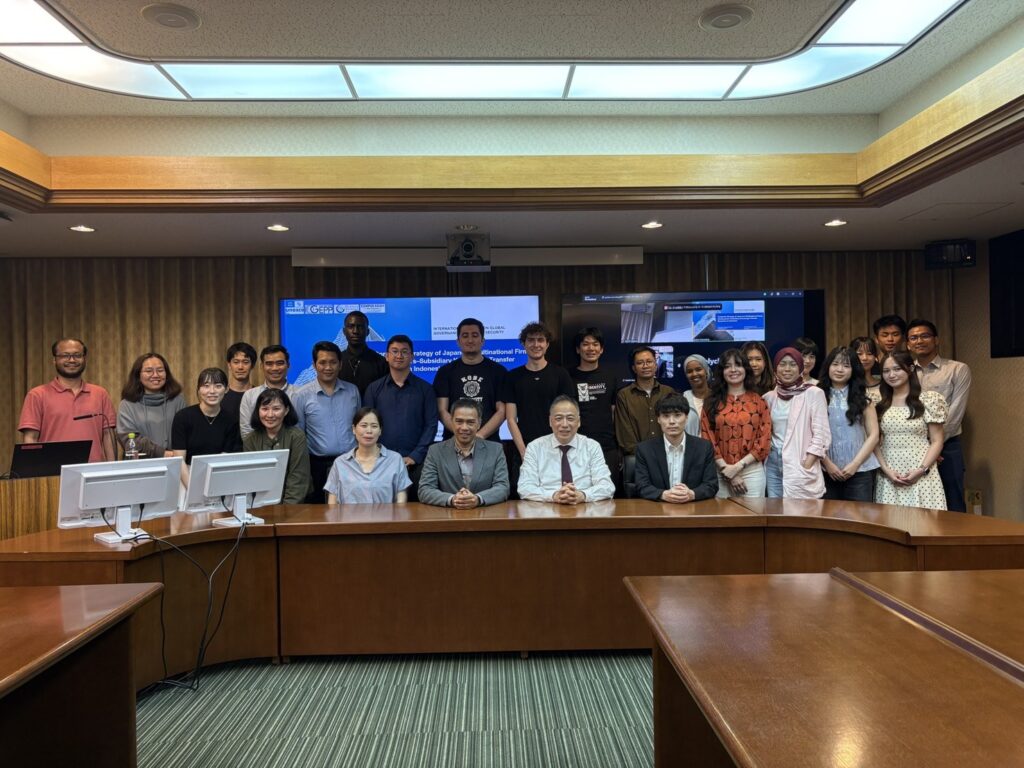
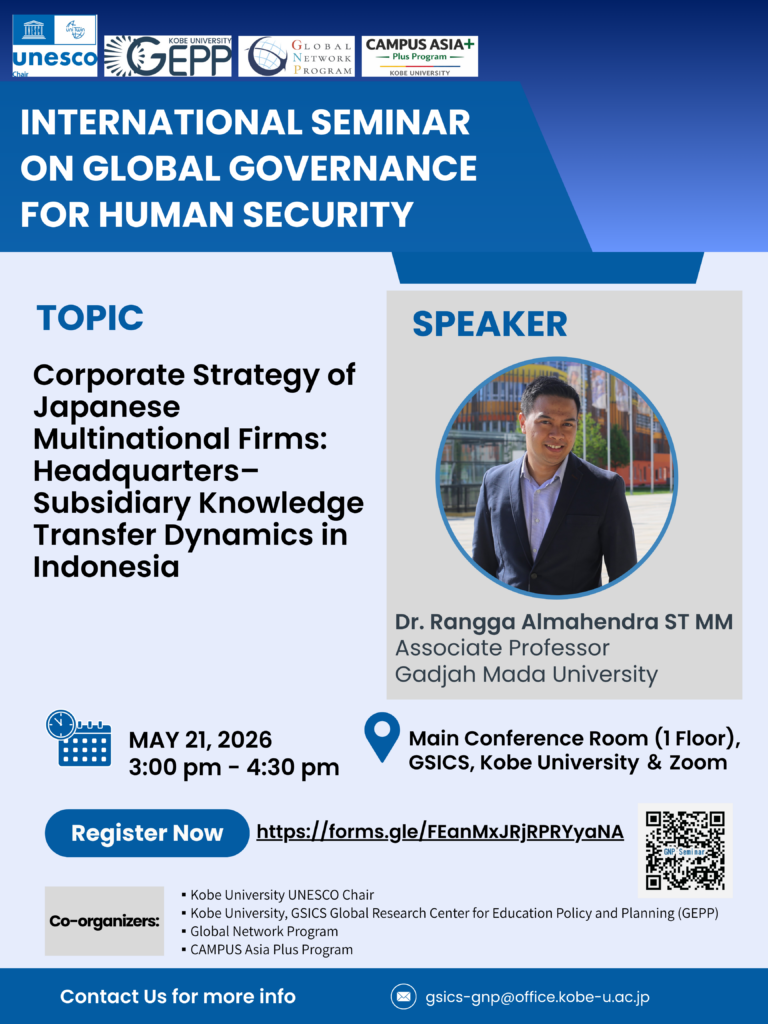
gepp1On May 21, 2026, an International Seminar on Global Governance for Human Security titled “Corporate Strategy of Japanese Multinational Firms: Headquarters–Subsidiary Knowledge Transfer Dynamics in Indonesia” was held. The seminar was co-organized by Kobe University’s UNESCO Chair, the Global Research Center for Education Policy and Planning (GEPP) at the Graduate School of International Cooperation Studies, Kobe University, the Global Network Program, and the CAMPUS Asia Plus Program, and was conducted in a hybrid format.
The seminar welcomed Dr. Rangga Almahendra ST MM, Associate Professor at Universitas Gadjah Mada. In his lecture, Dr. Almahendra discussed corporate strategies of Japanese multinational firms by focusing on headquarters–subordinate relationships, particularly the dynamics of knowledge transfer in Indonesia. The lecture explained how Japanese firms transfer technology, managerial know-how, and organizational knowledge to their overseas subsidiaries, as well as how local subsidiaries receive such knowledge and adapt it to local institutional and market contexts. He also discussed international business strategies of multinational firms from the perspectives of headquarters control and subsidiary autonomy, product localization, and local embeddedness.
A total of 38 students, faculty, and staff members participated in the seminar, with 25 attending in person and 13 joining online. During the Q&A session, participants raised questions from diverse perspectives, including the division of roles between headquarters and subsidiaries in knowledge transfer, challenges faced by Japanese firms in the Indonesian market, and the influence of overseas subsidiary autonomy on corporate strategy. The seminar provided participants with a valuable opportunity to understand Japanese firms’ overseas expansion not merely as the relocation of production bases, but as a process of international transfer and localization of knowledge, technology, and managerial resources.