
GEPP Co-hosted an International Seminar on “Managing Humanitarian and Development Projects under Uncertainty”
 gepp1
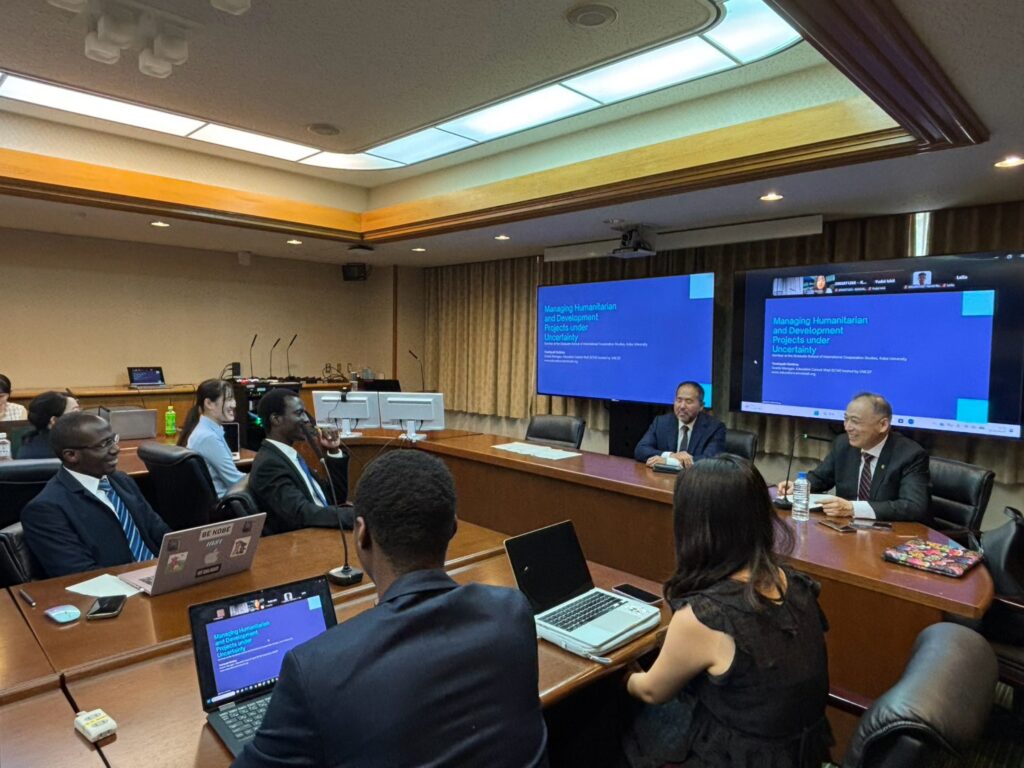
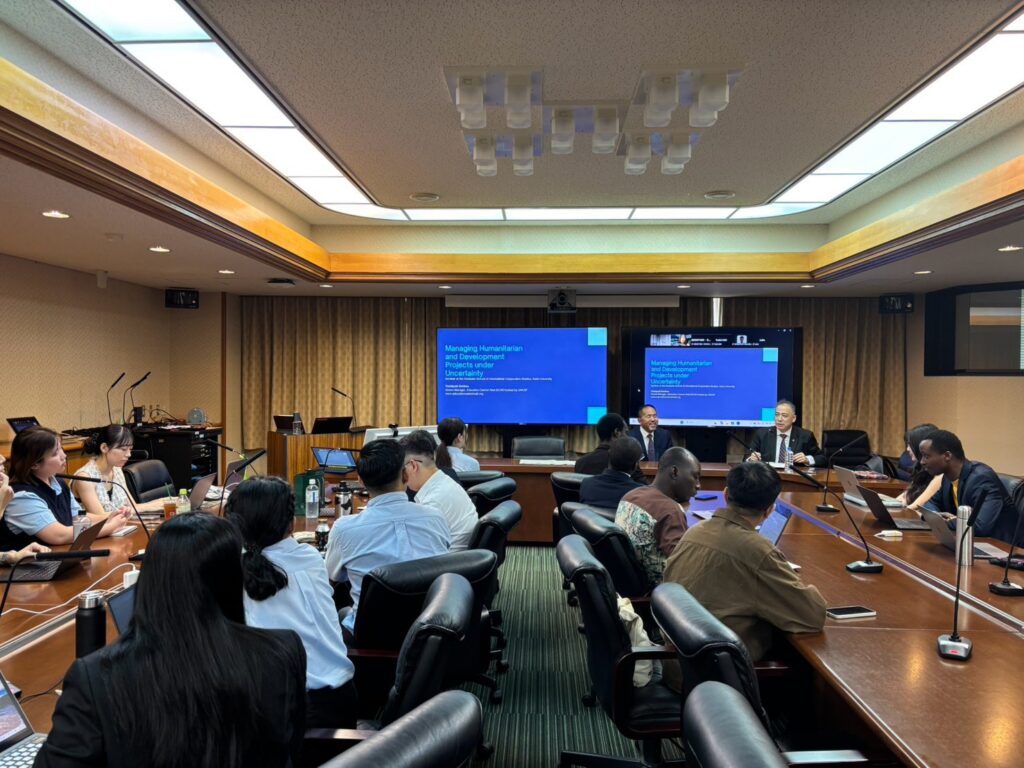
gepp1On September 25, 2026, the International Seminar on Global Governance for Human Security was held under the theme “Managing Humanitarian and Development Projects under Uncertainty: Ethics, Adaptation and Practical Decision-Making.” The seminar was conducted in a hybrid format in the Main Conference Room of the Graduate School of International Cooperation Studies (GSICS), Kobe University, and via Zoom. It was co-organized by the Global Research Center for Education Policy and Planning (GEPP), the Kobe University UNESCO Chair, the Global Network Program, and the CAMPUS Asia Plus Program.
The seminar featured Mr. Yoshiyuki Oshima, Grants Manager at Education Cannot Wait (ECW), the global fund hosted by UNICEF. Through a series of case studies, participants explored how humanitarian and development project teams can make appropriate decisions while remaining faithful to their original objectives when circumstances change unexpectedly. In particular, the seminar highlighted the importance of identifying who is at risk and what must be protected, comparing feasible responses based on available evidence and clearly stated assumptions, and, once a course of action is selected, assigning responsibility and defining when the decision should be reviewed.

The case studies addressed four situations that may arise in humanitarian and development projects. The first case focused on a refugee camp management project and examined how to protect the project’s objectives and public resources, and ensure appropriate procurement procedures while maintaining a workable relationship with the government. The second case considered an inclusive sports project for children and youth with disabilities and explored how “social inclusion,” which cannot be adequately captured by simply counting activities or equipment provided, can be measured while respecting outcomes that participants themselves consider meaningful. The third case examined the delivery of antiretroviral medication to a remote village clinic and discussed the logistics and contingency arrangements needed to maintain a reliable supply when unexpected problems arise in transportation routes or supply processes. The fourth case considered a situation in which a donor suddenly suspended funding for government-linked programs following a political crisis and discussed immediate responses and transition planning to prevent disruptions in services for people receiving HIV treatment while addressing the donor’s restrictions.
Participants were divided into four groups, with each group discussing one of the cases. They considered a recommended response and its rationale, the principal risks involved, the first actor who should take action and the agreement required, and the conditions that would trigger a review of the response. Each group then presented its conclusions, followed by a plenary discussion. The seminar emphasized that sound project management requires decisions to be supported by evidence, appropriate authorization, and clear documentation. It also highlighted that results should be understood not only in terms of activities completed but also from the perspectives of the people affected. In addition, credible contingency planning requires clearly defined triggers, responsible actors, and necessary resources. The importance of ensuring that affected people continue to have access to essential services during project transitions or closure was also emphasized.
Approximately 55 students and faculty members participated in the seminar, with around 25 attending in person and 30 joining online. The seminar provided a valuable opportunity to gain practical insights into how risks can be identified under conditions of uncertainty and how feasible responses can be developed and translated into decisions while taking into account their potential impacts on the people affected.