
GEPP Co-hosted an International Seminar on “Transitioning into an Academic Career, Conducting Original Research, and Three Recent Studies”
 gepp1
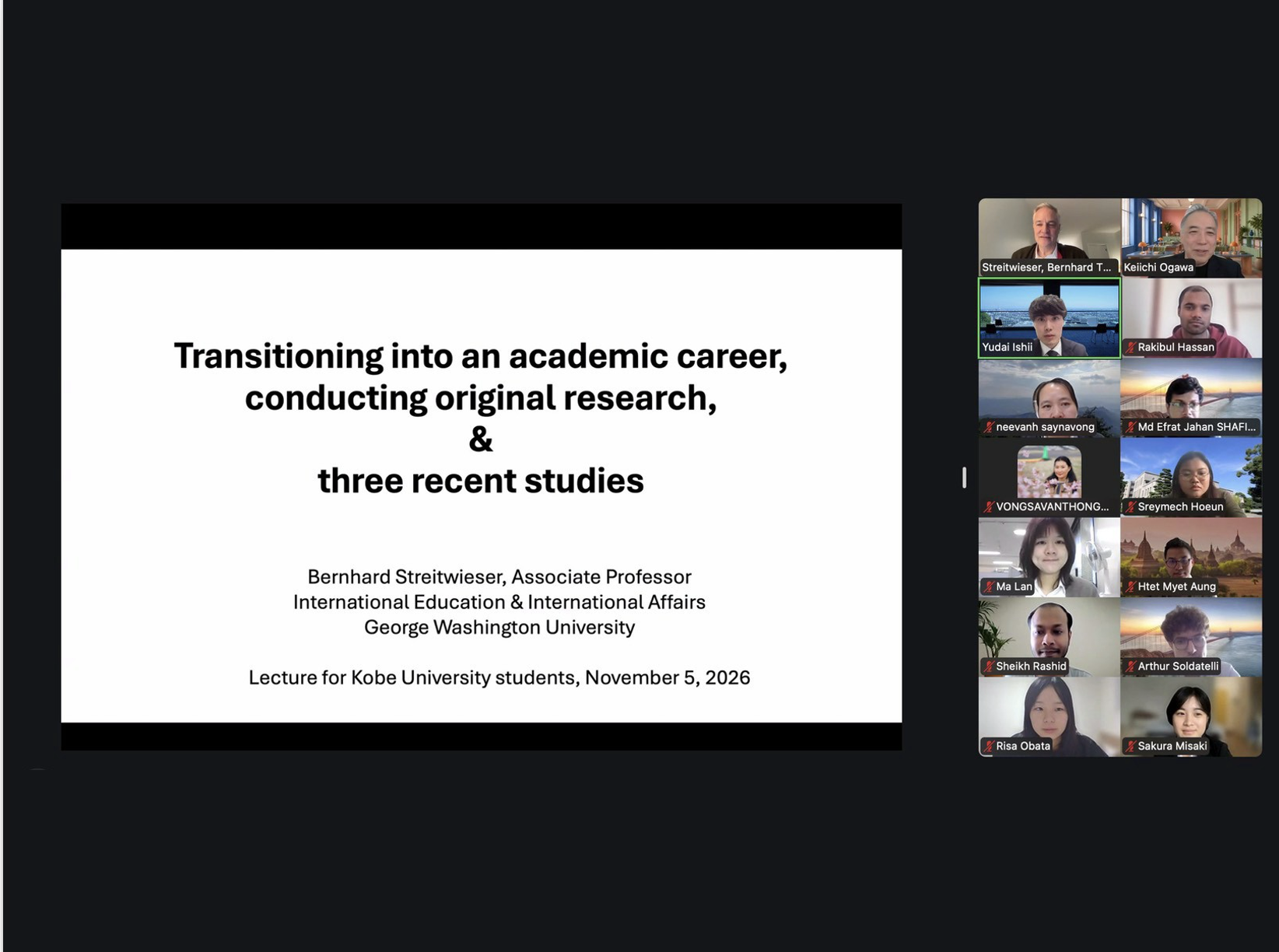
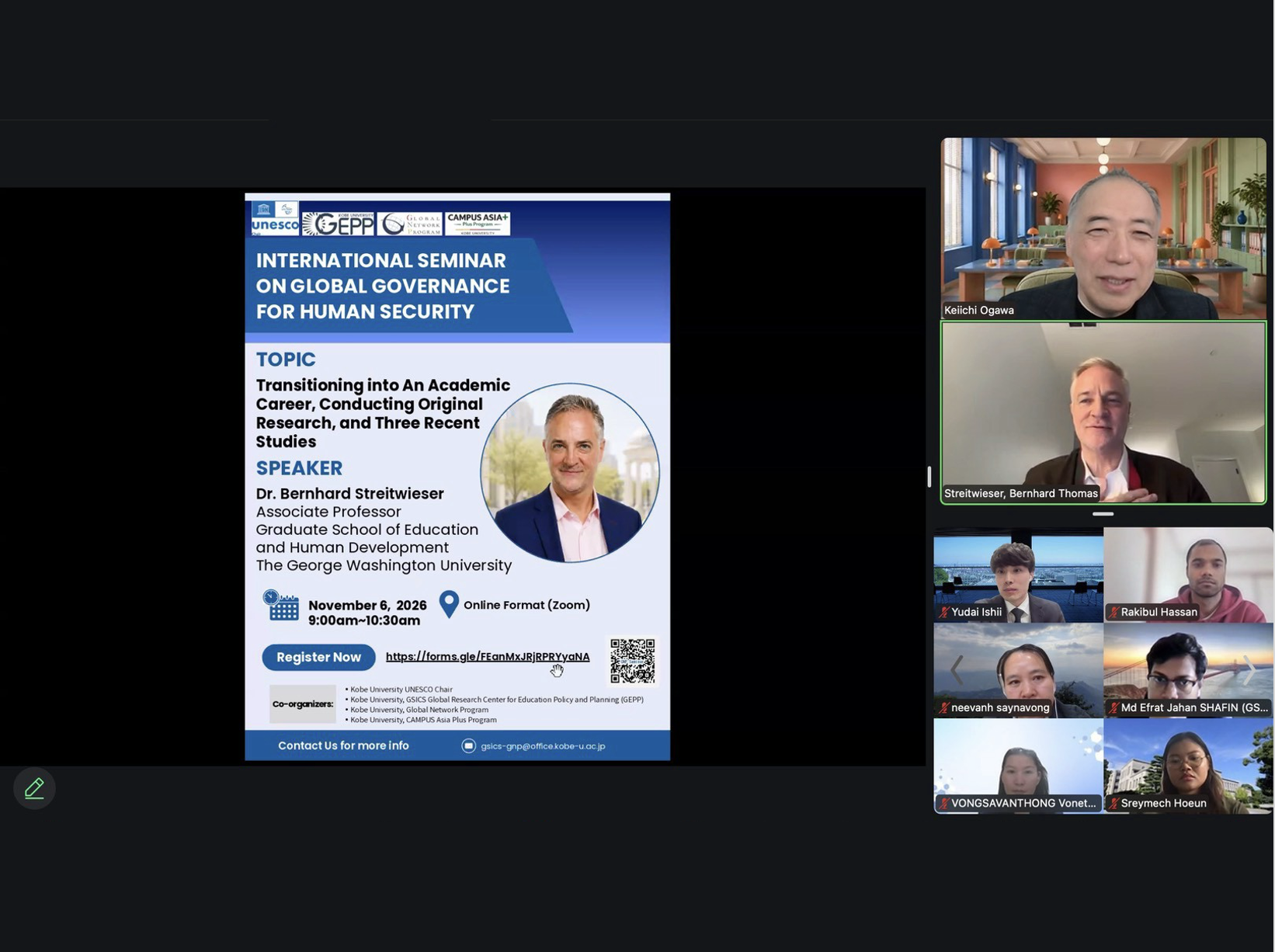
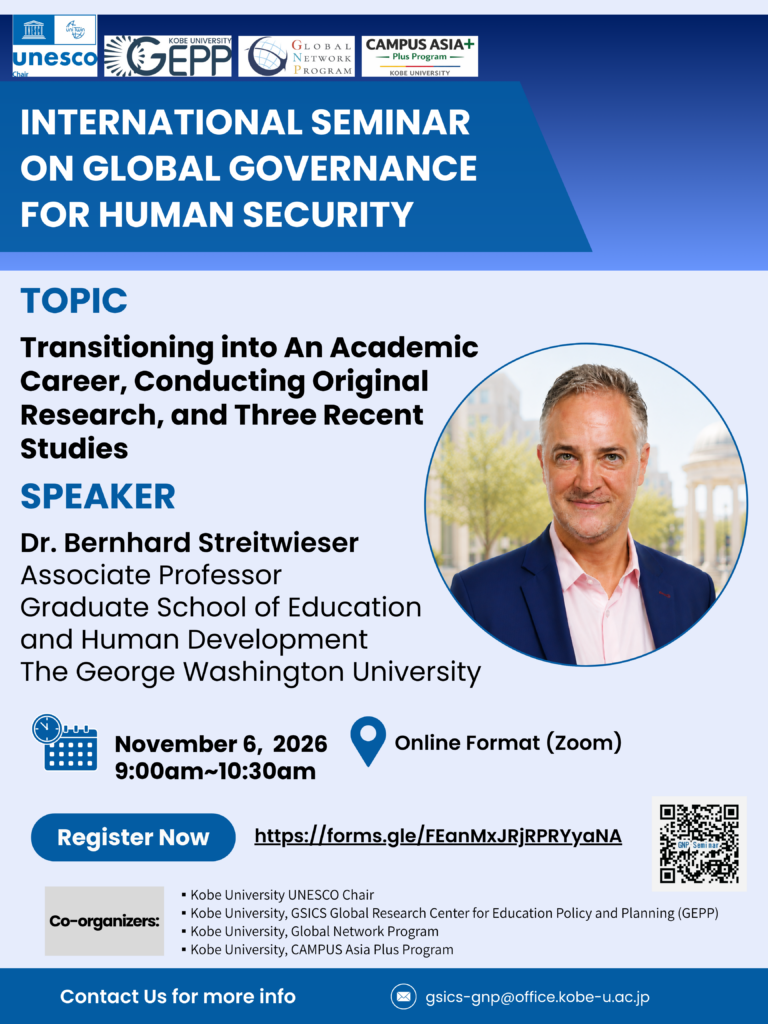
On November 6, 2026, the International Seminar on Global Governance for Human Security was held under the theme “Transitioning into an Academic Career, Conducting Original Research, and Three Recent Studies.” The seminar was conducted online via Zoom. It was co-organized by the Global Research Center for Education Policy and Planning (GEPP), the Kobe University UNESCO Chair, the Global Network Program, and the CAMPUS Asia Plus Program.
The seminar featured Dr. Bernhard Streitwieser, Associate Professor at the Graduate School of Education and Human Development, the George Washington University. Drawing on his transition from applied linguistics to comparative and international education, he shared insights into building an academic career. He emphasized the value of sustained research interests, strategic planning, mentorship, and lasting relationships with colleagues, alongside active participation in academic associations. He also described original research as a contribution grounded in researchers’ own data collection, analysis, and writing, stressing clarity and the importance of advancing understanding within the wider field.
Dr. Streitwieser then presented three studies on students from refugee backgrounds in higher education. The first analyzed 393 articles in higher education trade media, showing how coverage often celebrates admissions and scholarships while paying less attention to students’ voices, continued support, and post-graduation pathways. The second examined the experiences of Afghan students who moved from the American University of Afghanistan to the American University of Iraq, Sulaimani, before migrating onward to the United States. It highlighted academic, personal, social, and practical challenges, as well as opportunities to develop independence and resilience. The third explored university leadership during the same crisis, illustrating how a shared sense of responsibility, institutional networks, and flexible coordination helped mobilize support for displaced students.
A total of 28 participants attended the seminar online. The lecture emphasized that supporting students from refugee backgrounds requires sustained attention to belonging, well-being, and opportunities beyond admission, together with institutional cooperation and responsive leadership. The seminar provided a valuable opportunity to reflect on academic career development and the conduct of original research, and to deepen understanding of the responsibilities of higher education institutions toward students affected by forced displacement.