
GEPP Co-hosted an International Seminar on “Testing the Line: The Teaching Profession Meets Algorithmic Management”
 gepp1
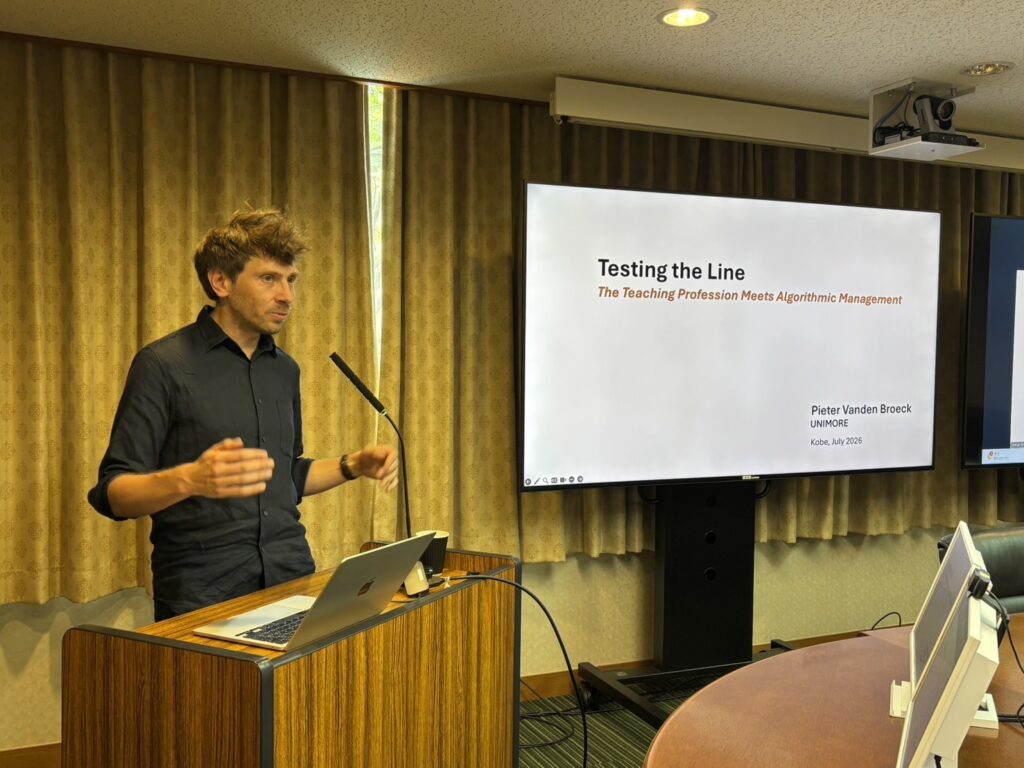
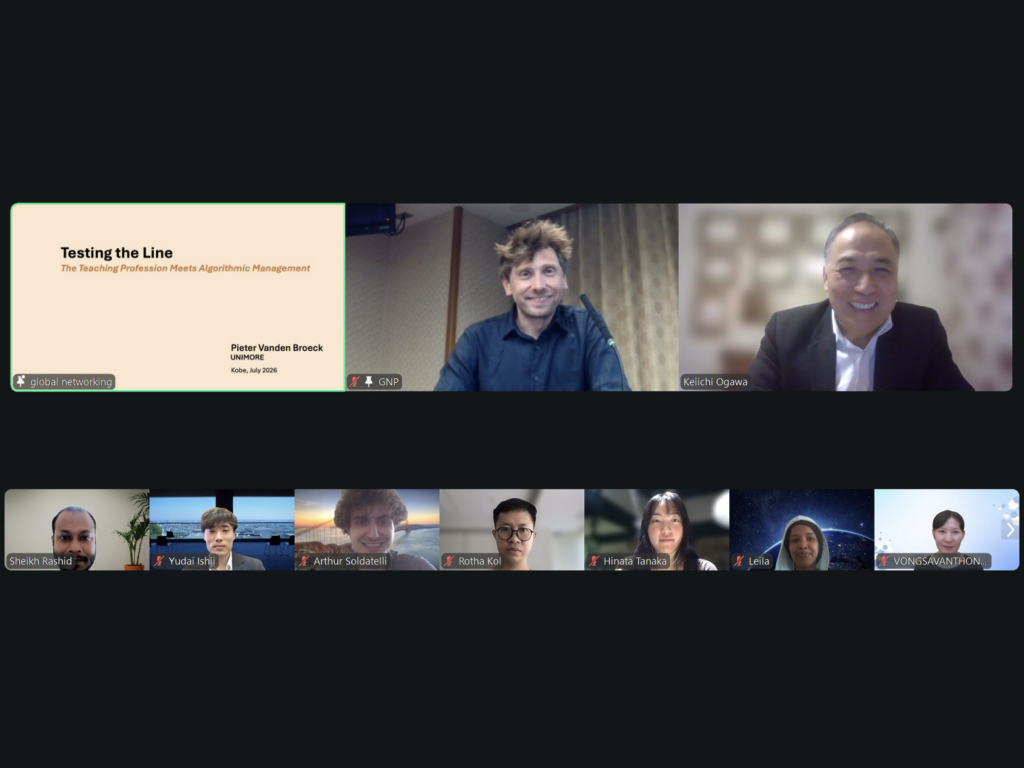
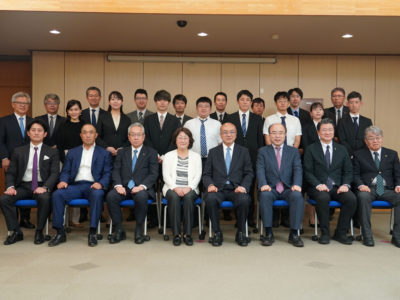
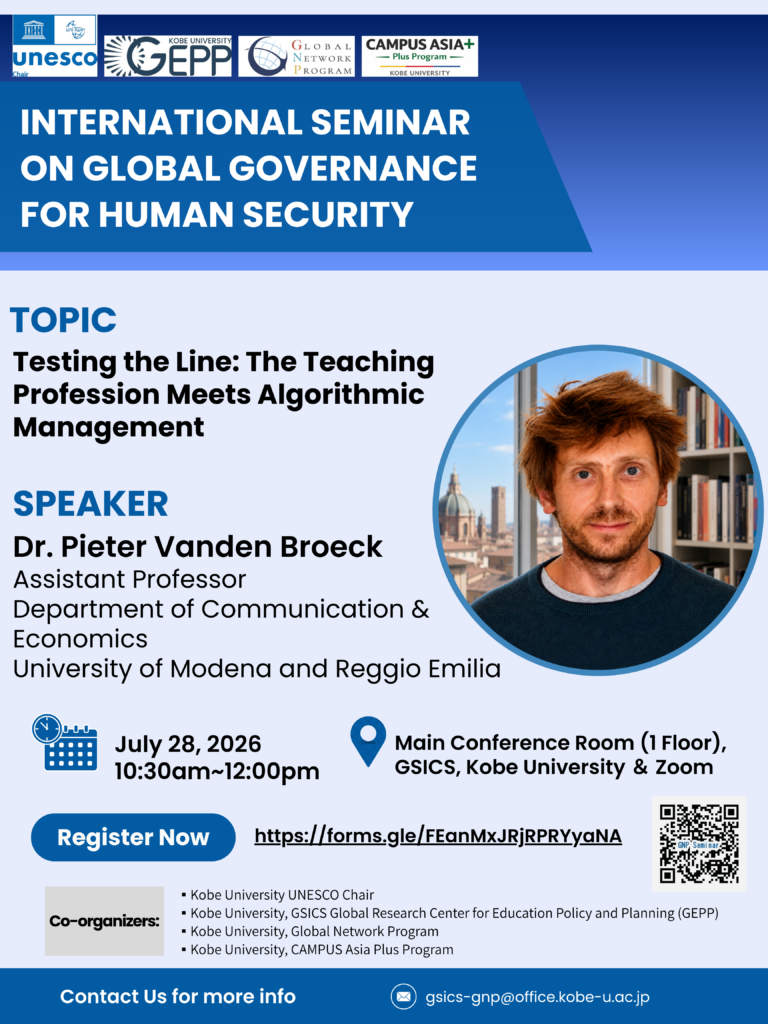
gepp1On July 28, 2026, the International Seminar on Global Governance for Human Security was held under the theme “Testing the Line: The Teaching Profession Meets Algorithmic Management.” The seminar was conducted in a hybrid format and co-organized by the Global Research Center for Education Policy and Planning (GEPP), the Kobe University UNESCO Chair, the Global Network Program, and the CAMPUS Asia Plus Program.
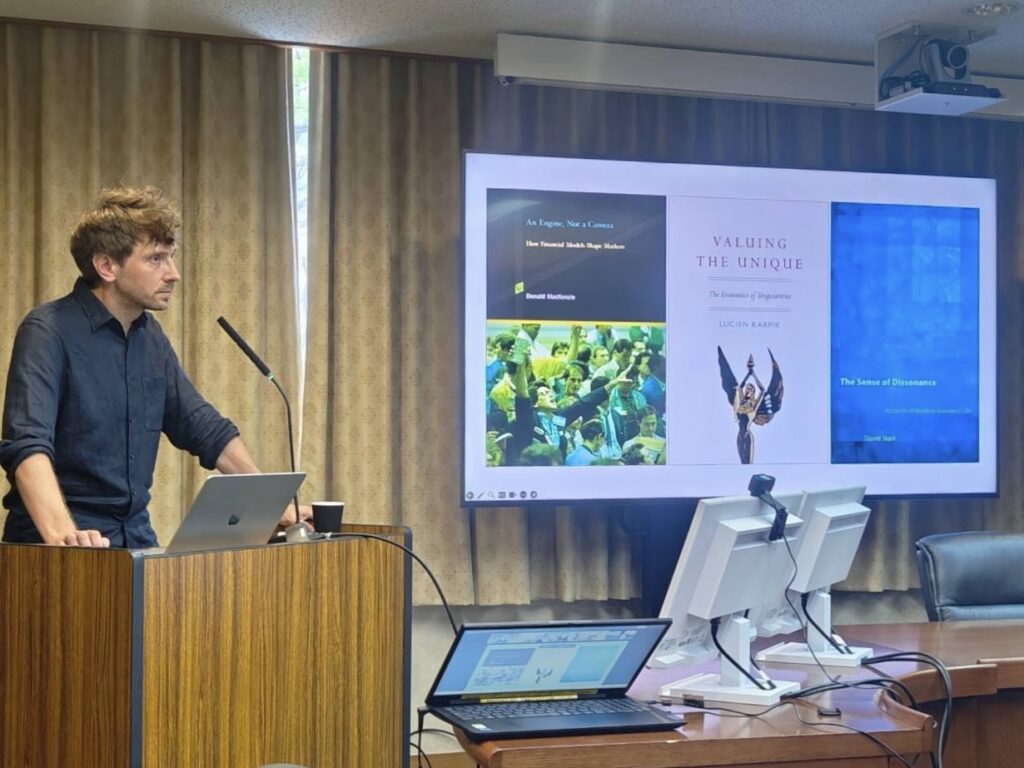
The seminar featured Dr. Pieter Vanden Broeck, Assistant Professor in the Department of Communication and Economics at the University of Modena and Reggio Emilia in Italy. He began by introducing two major perspectives in economic sociology: one that views economic activities as embedded in social relations, and another that understands them as constituted by cultural values and cognitive frameworks. Summarizing the turn to valuation studies, he then pointed out that neither perspective has sufficiently examined “calculative practices”—the processes through which decisions are made about what should be measured, evaluated, and regarded as valuable—or the actors who design the tools used for such purposes. The relationship between the teaching profession and algorithmic management was subsequently discussed from the perspective of jurisdictional competition among professions. Traditionally, professions have claimed authority and expertise over particular areas of work and defended these domains against other occupational groups. Contemporary algorithms, however, are not confined to any single professional domain but operate simultaneously across multiple fields. Algorithmic management was therefore presented not simply as the emergence of a new profession replacing teachers, but as an “un-professional” form of management that cuts across the very framework of professional work.
Drawing on a recent publication with David Stark, the lecture also offered a historical comparison between scientific management in the early twentieth century and algorithmic management in the twenty-first century. Scientific management advanced the standardization of working time and production processes by collecting and classifying workers’ experiential knowledge, converting it into rules and formulas, and separating those who planned work from those who executed it. Algorithmic management, by contrast, was described not as a mere technological upgrading of scientific management, but as a system grounded in a fundamentally different worldview. Whereas scientific management regarded human beings as programmable, algorithmic management assumes that machines themselves are capable of learning and intervenes in the space between teachers and students, as well as between professionals and the recipients of their services. This creates new relationships of authority concerning who makes educational judgments and classifications and how teachers’ professional knowledge is positioned. The lecture also presented an analysis of 5,132 publications extracted from Scopus, conducted with Eric Mangez. The findings demonstrated not only the rapid recent growth of research on algorithms, but also differences across academic disciplines and regions: the same technologies may be regarded as instruments for solving problems in some contexts, while being subjected to critical examination in others, including education, the social sciences, and computer science.
A total of 33 participants attended the seminar, including 10 in person and 23 online. During the question-and-answer session, participants actively exchanged views on differences in algorithmic management between the United States and Europe and those in developing countries, the relationship between educational platforms and pedagogical principles, and the transparency of educational data and decision-making processes. The seminar provided a valuable opportunity to reconsider the digitalization of education not merely as a technological change, but as a social and organizational transformation that is reshaping the professional role of teachers, relationships between teachers and students, and the distribution of knowledge and authority within school organizations.