


Research Divisions
Development of nanosheet-layered membranes with 2D nanochannels (Matsuyama/Guan)
Graphene oxide (GO) offers a versatile platform for constructing two-dimensional nanochannels capable of selective molecular and ionic transport. Our research focuses on understanding and controlling the structural and chemical characteristics of these layered membranes to achieve stable and efficient separation performance. Through chemical conversion and molecular intercalation strategies (e.g., Ag nanoparticle intercalation, Figure 1), we regulate interlayer spacing and pore-wall chemistry with molecular precision, enabling the formation of robust and tunable nanochannels that retain their integrity under aqueous and pressurized conditions. Systematic comparisons of molecular modifiers and intercalants have clarified how nanoscale confinement and interfacial chemistry jointly determine the stability and functionality of GO laminates, providing design principles for next-generation water and ion separation membranes.
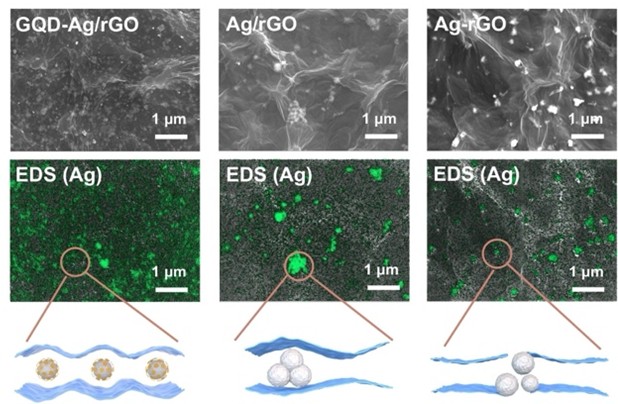
Figure 1. Regulating Ag nanoparticle intercalation in nanochannels membranes (Chem. Eng. J., 2023, 465, 143005)
In parallel, we investigate the transport mechanisms of water and ions confined within these nanochannels. The interplay between structural confinement and electrostatic interactions governs the distinct separation behavior observed in sub-nanometer spaces (Figure 2). Our recent findings reveal that ion selectivity in GO membranes is predominantly influenced by charge interactions under appropriate confinement, and that recovery of nanochannel deformation under pressure plays a key role in sustaining selective transport. These insights establish a fundamental framework for understanding ion dynamics in confined two-dimensional spaces and guide the design of next-generation membranes for precise molecular and ionic separations.
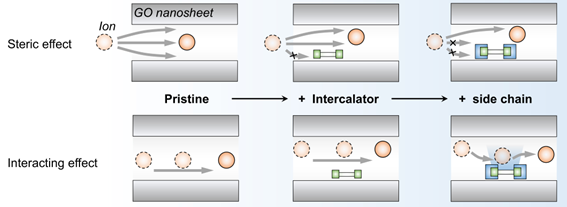
Figure 2. Factors controlling ion transport in nanochannels (Nano Lett., 2023, 23, 6095–6101)
