
GEPP Co-hosted an International Seminar on “Disaster Resilience: Its Conceptual Evolution and Its Policy Implications for DRR”
 gepp3
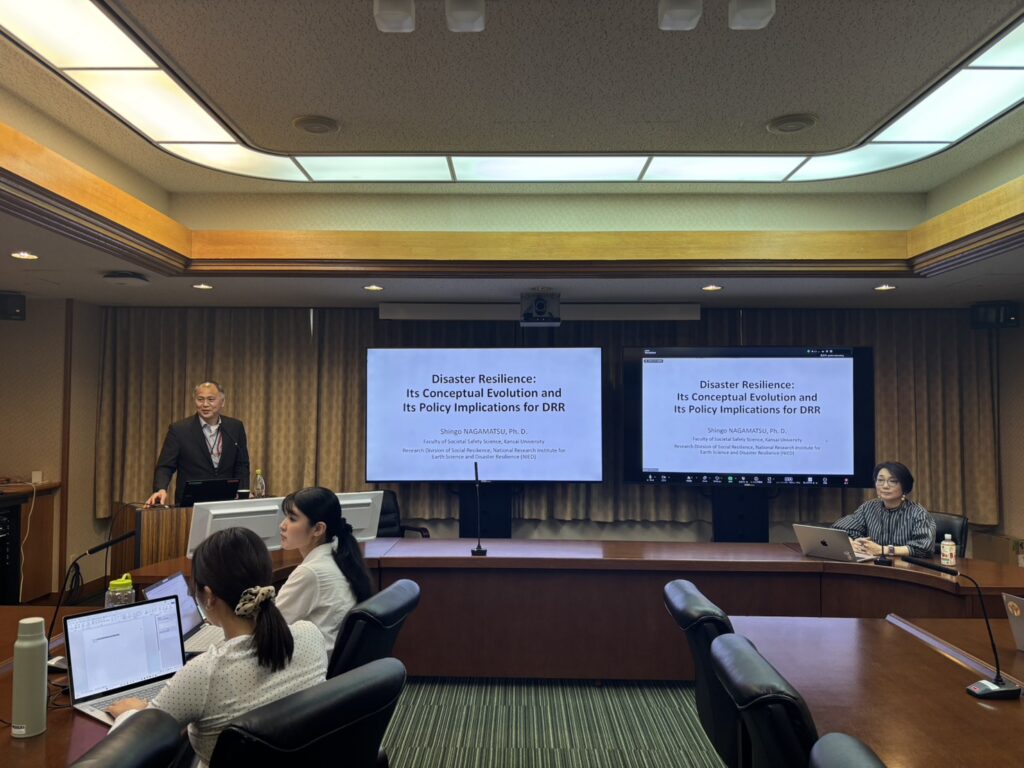
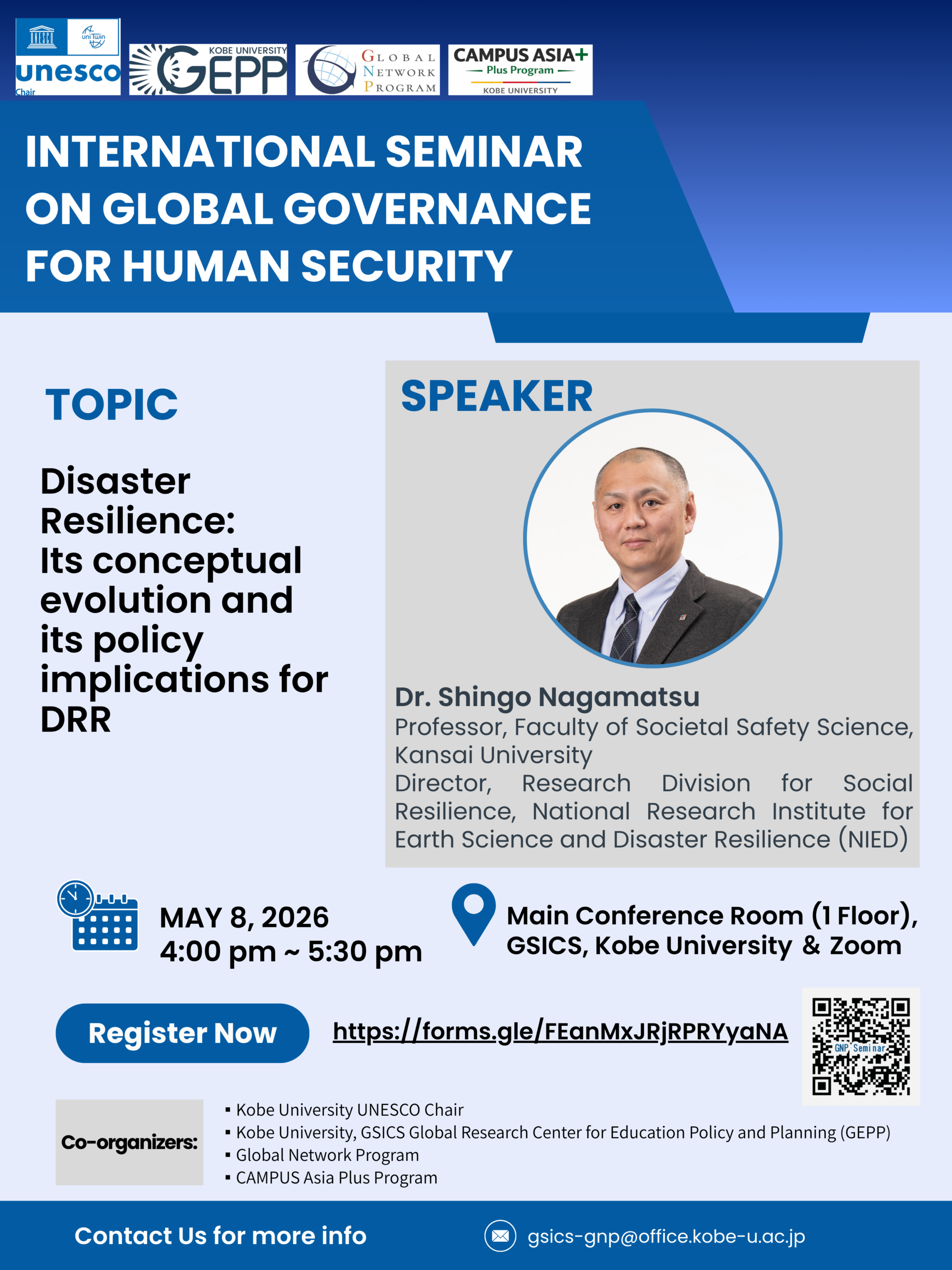
gepp3On May 8, 2026, an International Seminar on Global Governance for Human Security titled “Disaster Resilience: Its Conceptual Evolution and Its Policy Implications for DRR” was held. The seminar was co-organized by Kobe University’s UNESCO Chair, the Global Research Center for Education Policy and Planning (GEPP) at the Graduate School of International Cooperation Studies, Kobe University, the Global Network Program, and the CAMPUS Asia Plus Program, and was conducted in a hybrid format.
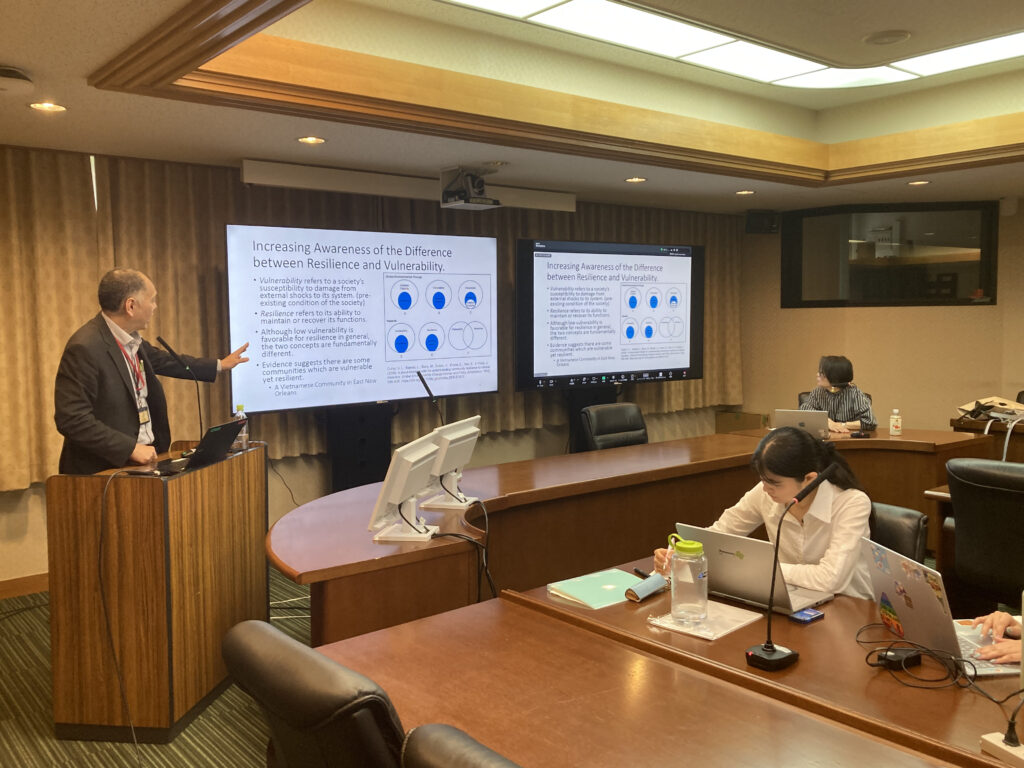
The seminar welcomed Dr. Shingo Nagamatsu, Professor at the Faculty of Societal Safety Science, Kansai University, and Director of the Research Division for Social Resilience at the National Research Institute for Earth Science and Disaster Resilience (NIED). In his lecture, Dr. Nagamatsu traced the conceptual evolution of disaster resilience from the perspectives of disaster research, social systems, and policy practice. He emphasized the importance of understanding resilience not merely as the ability to “recover,” but as a multi-dimensional capacity that includes maintaining, recovering, and transforming. The lecture also highlighted key implications for disaster risk reduction (DRR) policy by discussing the conceptual development of disaster resilience, its distinction from vulnerability, transformative resilience, and concrete examples such as Cash for Work programs.
A total of 27 students, faculty, and staff members participated in the seminar, with 13 attending in person and 14 joining online. During the Q&A session, participants raised questions from diverse perspectives, including the relationship between political regimes, armed conflict, and resilience, as well as the concept of resilience as examined through international conceptual frameworks. The seminar provided participants with a valuable opportunity to deepen their understanding of the importance of DRR in international development and to consider disaster resilience from both theoretical and practical perspectives.