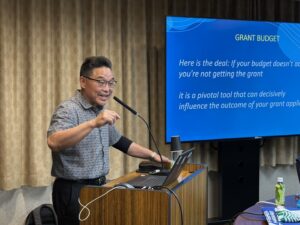

GEPP Co-hosted an International Seminar on “Disaster Reduction, from Humanitarian Assistance to Sustainable Development - Sharing the Japanese Experience -”
 gepp3
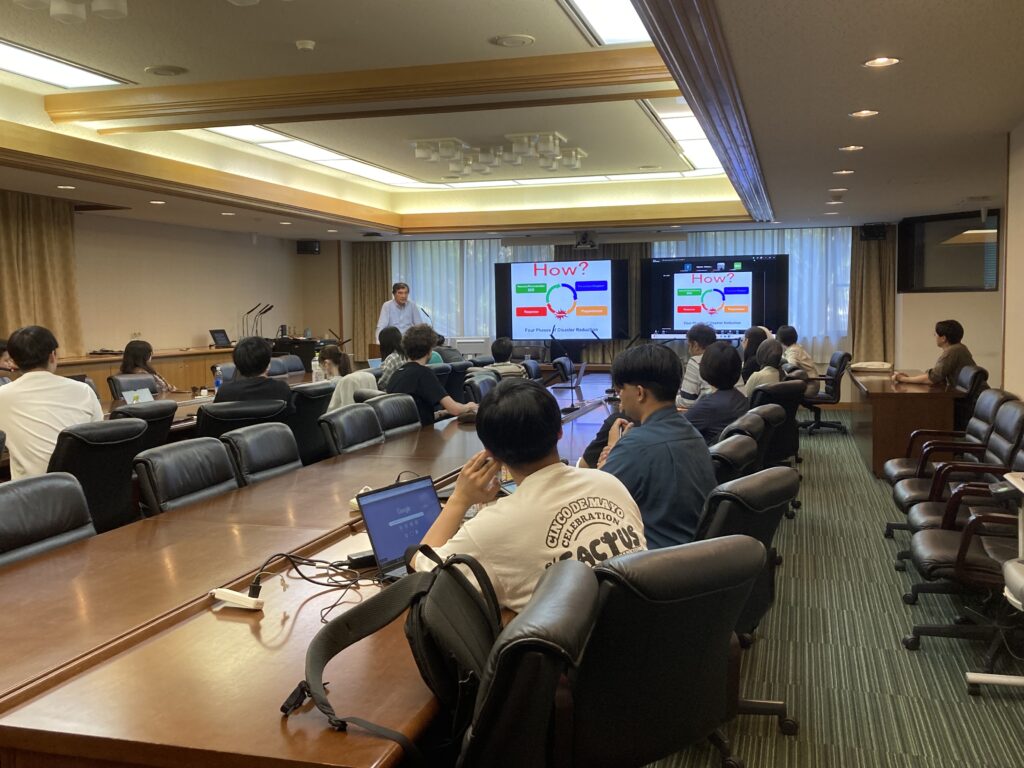
gepp3On May 18, 2026, an International Seminar on Global Governance for Human Security titled “Disaster Reduction, from Humanitarian Assistance to Sustainable Development - Sharing the Japanese Experience -” was held. The seminar was co-organized by Kobe University’s UNESCO Chair, the Global Research Center for Education Policy and Planning (GEPP) at the Graduate School of International Cooperation Studies, Kobe University, the Global Network Program, and the CAMPUS Asia Plus Program, and was conducted in a hybrid format.
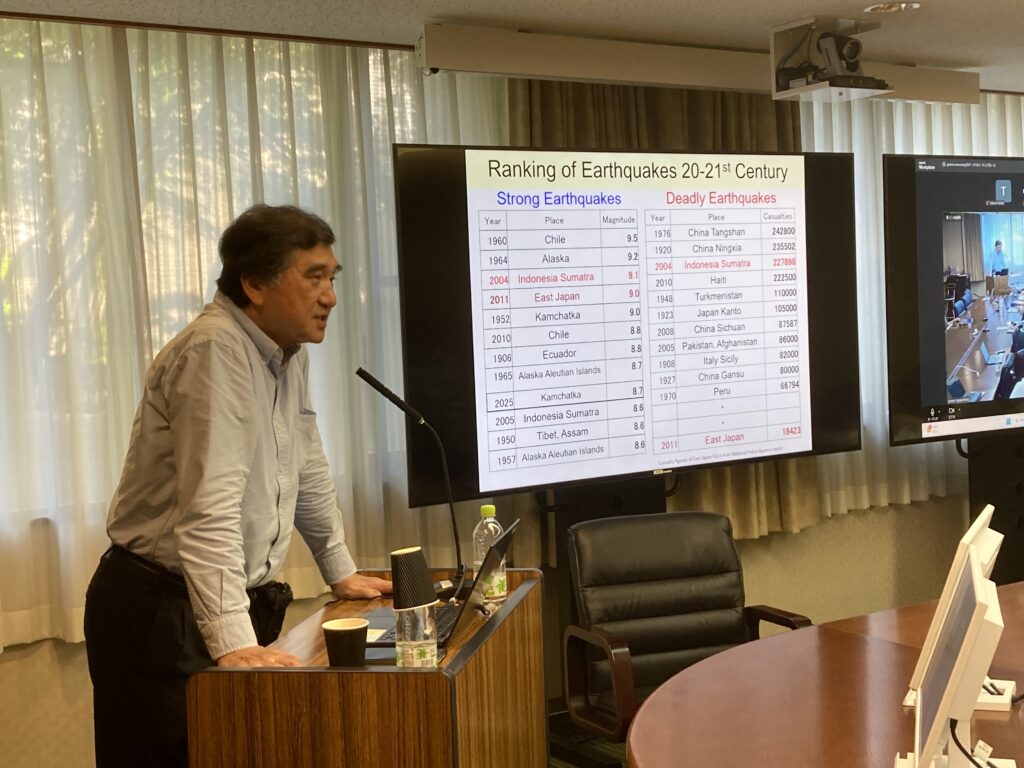
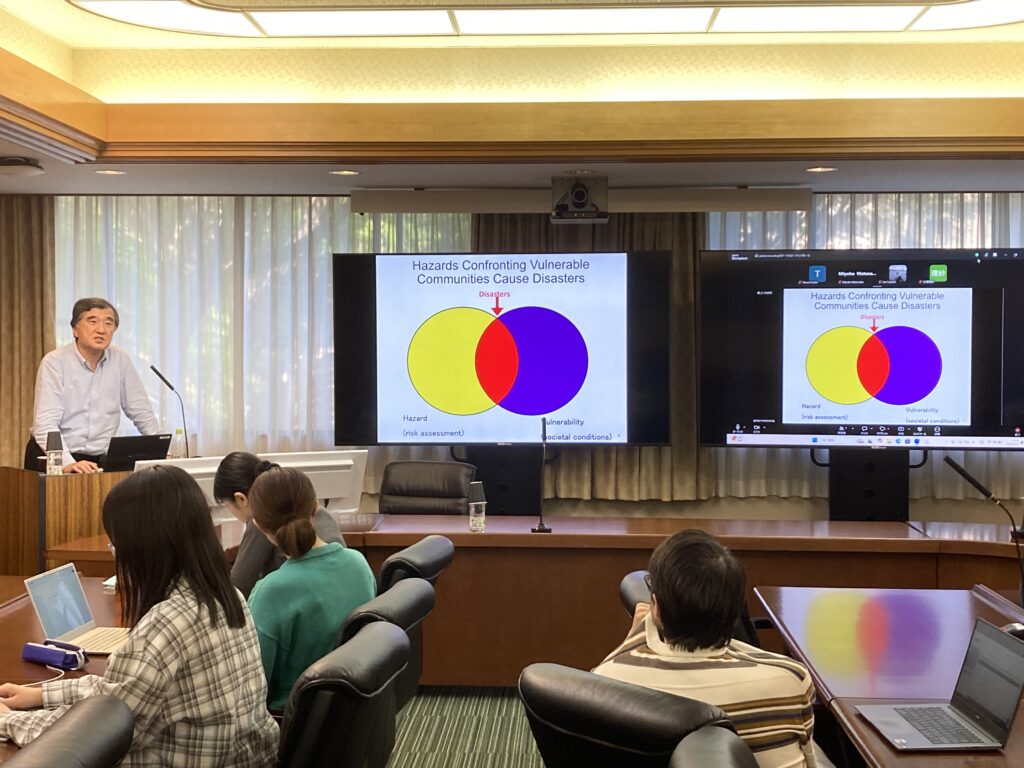
The seminar welcomed Dr. Satoru Nishikawa, JICA Senior Adviser for Disaster Reduction Strategy and Specially Appointed Professor at the International Research Institute of Disaster Science, Tohoku University. In his lecture, Dr. Nishikawa emphasized the importance of understanding disaster reduction not only as part of humanitarian assistance but also as an essential component of sustainable development. The lecture covered the mechanisms through which hazards affect vulnerable communities, the evolution of international frameworks for disaster reduction, and the historical development of disaster management and prevention systems in Japan. Drawing on Japanese experiences such as the Ise-wan Typhoon, the Hanshin-Awaji Earthquake, and the Great East Japan Earthquake, he also discussed the significance of pre-disaster investment, Build Back Better, the promotion of a culture of prevention, and the sharing of Japan’s disaster reduction experience through international cooperation.
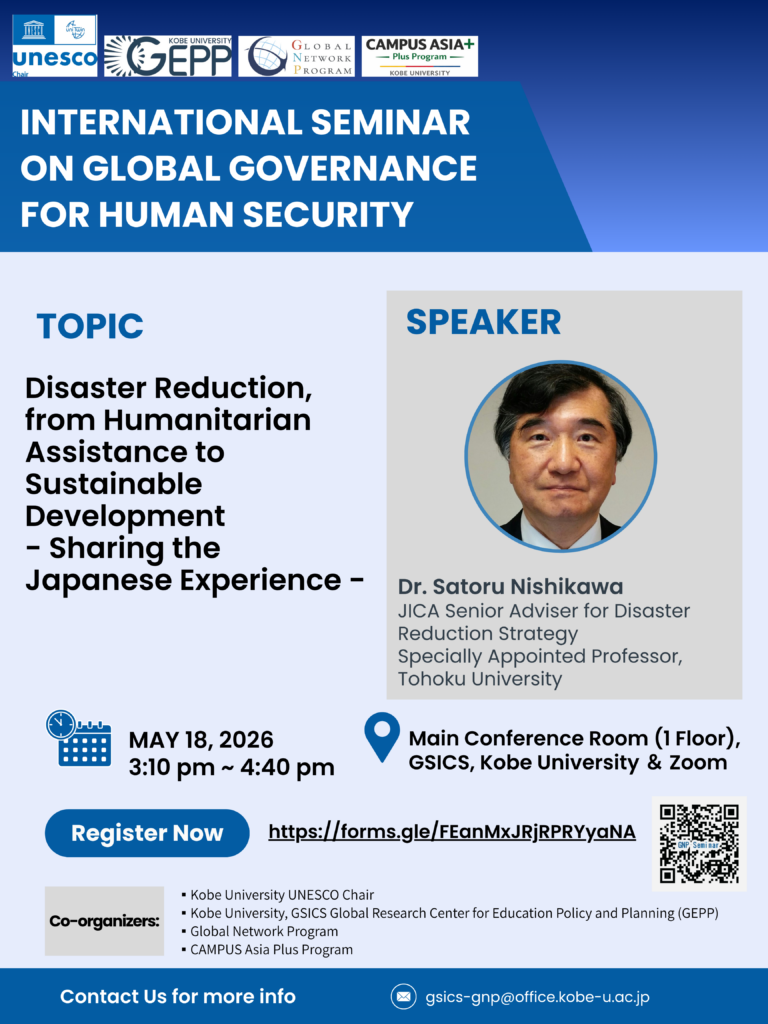
A total of 21 students, faculty, and staff members participated in the seminar, with 17 attending in person and 4 joining online. During the Q&A session, participants raised questions from diverse perspectives, including the possibility that recovery policies may reshape disaster risks, and how Japan’s disaster risk reduction experience can be applied in different country contexts. The seminar provided participants with a valuable opportunity to consider disaster response not merely as post-disaster humanitarian assistance, but as a preventive and institutional effort that supports sustainable development.